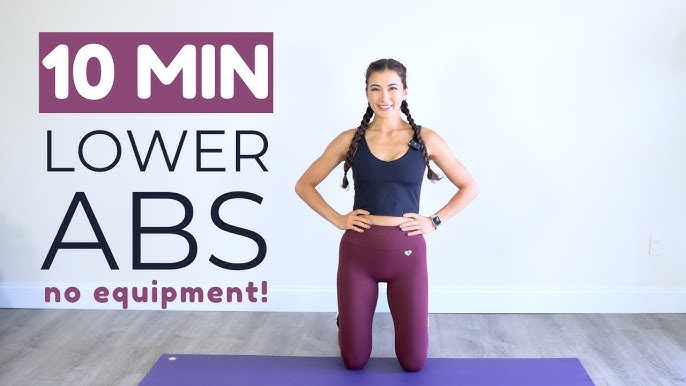
Are you tired of crunches that seem to target everything but your lower abs? You’re not alone.
Many people find this area particularly challenging to tone, and without the right guidance, it can feel like you’re hitting a fitness wall. But what if you could sculpt your lower abs without ever stepping foot in a gym? Imagine achieving that toned look from the comfort of your own home.
In this guide, you’ll discover simple yet effective exercises tailored to hone in on those stubborn lower abs. No fancy equipment, no complicated routines—just straightforward workouts that deliver real results. Ready to transform your core and boost your confidence? Keep reading to unlock the secrets to a stronger, more defined lower abdomen.

Credit: www.youtube.com
Importance Of Lower Ab Workouts
Lower ab workouts are crucial for a strong core. They enhance balance and stability. A strong core supports daily activities. It reduces the risk of injuries. Training the lower abs also improves posture. This leads to fewer back pains.
Focusing on lower abs helps in toning the midsection. It provides a more defined and sculpted look. Lower ab workouts contribute to overall core strength. This supports better performance in various physical activities.
Why Lower Abs Matter
The lower abs play a vital role in movement. They stabilize the pelvis and spine. This is important for effective movement. A strong lower core aids in lifting and bending. It also helps in twisting actions.
Many people neglect lower abs. They focus only on upper abs. This leads to an imbalanced core. It can cause discomfort or injury. Ensure to include varied exercises. This targets the entire core.
Benefits Of Training At Home
Home workouts offer flexibility. They fit into any schedule. No need for expensive gym memberships. You can use household items for resistance. This makes it cost-effective.
Engaging The Correct Muscles
Focus on engaging the right muscles. Use slow, controlled movements. Avoid using momentum. This ensures the lower abs are effectively targeted. Proper technique maximizes workout benefits.

Credit: www.tiktok.com
Anatomy Of Lower Abs
The lower abs often seem elusive in the pursuit of a toned core. Understanding their anatomy is crucial for targeting them effectively during workouts. The lower abs are part of the rectus abdominis, which is a long muscle that runs vertically along the front of your abdomen. This muscle is responsible for flexing the lumbar spine and plays a vital role in maintaining posture and stability.
Anatomy Of Lower Abs: What You Need To Know
Did you know that the lower abs aren’t a separate muscle? They’re actually the lower section of the rectus abdominis. This means workouts targeting this area can be tricky because they involve engaging the entire muscle. Yet, with specific exercises, you can emphasize the lower portion.
The lower abs are engaged through exercises that involve lifting your pelvis towards your rib cage. Think of movements like leg raises or reverse crunches. These movements focus on flexing the lower part of the rectus abdominis and help in achieving that coveted definition.
Understanding Muscle Activation
Activating your lower abs isn’t just about going through the motions. It’s about feeling the contraction and maintaining control. When performing exercises like leg raises, focus on the slow and steady movement. Feel the burn as you lift your legs and hold them at the peak of the exercise.
Breathing plays a significant role too. Controlled exhalation as you lift can help engage the lower abs more effectively. This technique can make a noticeable difference in your workout results.
The Role Of Mind-muscle Connection
Have you ever found yourself mindlessly lifting weights, only to realize you weren’t really feeling the exercise? Establishing a mind-muscle connection with your lower abs can change this. Concentrate on the muscle you’re working; visualize it contracting and expanding.
This not only enhances your workout but also ensures you’re truly targeting the lower abs. The next time you do a set of reverse crunches, tune into what your body is doing. You’ll likely notice better engagement and results.
Are you making the most out of your lower ab workouts? A common error is relying too much on momentum rather than muscle strength. Swinging your legs during leg raises might feel easier, but it cheats your lower abs of a proper workout.
Instead, aim for slow, controlled movements. This minimizes the risk of injury and maximizes muscle engagement. Another mistake is neglecting your form. Always keep your lower back pressed firmly to the floor to avoid strain.
Personal Experiences: Lessons Learned
When I first started focusing on my lower abs, I struggled with consistency. I’d rush through exercises without really engaging the muscles. Over time, I learned the importance of slowing down and concentrating on each movement.
This shift in approach not only improved my form but also resulted in more defined lower abs. If you’re not seeing the results you want, reassess your technique. You might find that small changes can lead to big improvements.
Final Thoughts: A Question For You
As you venture into working out your lower abs, ask yourself: are you truly engaging your muscles, or just going through the motions? Reflect on your technique and make adjustments where needed. Your lower abs deserve your full attention and effort.
Setting Up Your Home Space
Create an effective home workout space for targeting lower abs. Use simple equipment like a mat and resistance bands. Try exercises such as leg raises and bicycle crunches for optimal results.
Setting Up Your Home Space Creating a dedicated workout space at home is crucial for achieving those lower abs goals. Imagine waking up and knowing exactly where to head for your workout without any fuss. This setup not only saves time but keeps you focused and motivated. But how do you go about setting up the perfect spot? Let’s dive in and make your home workout area a sanctuary of fitness.Choosing The Right Area
The first step in setting up your workout space is choosing the right area. Look for a spot that is quiet and free from distractions. A corner in your living room or bedroom can work perfectly. Make sure it’s spacious enough to lay down a yoga mat and perform exercises without bumping into furniture. Consider the lighting too. Natural light can boost your mood and energy levels during workouts. If possible, choose a space near a window. Ask yourself, does this area inspire you to move? If not, you might want to reconsider your choice.Essential Equipment
You don’t need fancy gym equipment to work out your lower abs at home. Start simple with essentials like a yoga mat and a pair of dumbbells. These basics will help provide comfort and add resistance to your workouts. Resistance bands are a great addition too. They’re compact, affordable, and can add an extra challenge to your routine. A stability ball can also be useful for various core exercises. Think about what will make your workouts enjoyable. Maybe a Bluetooth speaker for your favorite tunes? You might find that small additions can transform your space into a motivating workout haven. Ultimately, the key is to ensure your space is inviting and equipped with tools that support your fitness journey. Are you ready to create a space that fuels your commitment to those lower abs workouts?Warm-up Exercises
Getting the most out of your lower abs workout starts with a proper warm-up. Warming up prepares your muscles and reduces the risk of injury. Plus, it sets the stage for a more effective workout. Ever started a workout feeling sluggish? A good warm-up can turn that around, giving you energy and focus right from the beginning.
Dynamic Stretches
Dynamic stretches are key for loosening up your body. They enhance blood flow and get your muscles ready for action. Try leg swings to loosen up your hips and lower body. Stand tall and swing one leg forward and backward, keeping your balance. Feel your muscles waking up with each swing.
Lunges with a twist add a core element to your stretch routine. Step forward into a lunge, then twist your torso towards the side of your forward leg. This movement not only stretches your legs but also activates your core. Are you feeling that twist in your midsection? That’s your core getting ready for action.
Core Activation
Core activation exercises are essential for engaging your abs. They ensure that your muscles are ready for the workout ahead. Begin with simple exercises like the plank. Hold a plank position for 30 seconds, focusing on keeping your body straight. Feel your abs tighten as they support your body.
Another effective move is the dead bug exercise. Lie on your back, lift your arms and legs, and slowly lower opposite limbs towards the floor. This movement requires control and concentration. Notice how your abs engage to stabilize your body. Can you feel the burn as you maintain your form?
Effective Lower Ab Exercises
Developing strong lower abs can be challenging, but with the right exercises, you can effectively target this area without needing a gym. Working out at home offers convenience and flexibility, allowing you to fit a core-strengthening routine into your daily life. Here are some effective exercises to help you engage and tone your lower abs, ensuring your core is both strong and defined.
Reverse Crunches
Reverse crunches are a fantastic way to target the lower abs specifically. Lie on your back with your hands by your sides, palms facing down. Bend your knees at a 90-degree angle and lift your feet off the floor.
Engage your core and lift your hips off the ground, pulling your knees toward your chest. Slowly lower your hips back to the starting position without letting your feet touch the floor. Aim for 15-20 repetitions, focusing on controlled movements.
Leg Raises
Leg raises are simple yet effective for strengthening the lower abs. Start by lying flat on your back with your legs extended and your arms at your sides.
Keep your legs straight as you lift them towards the ceiling until they form a 90-degree angle with your torso. Slowly lower them back down without letting them touch the ground, maintaining tension in your lower abs. Shoot for 10-15 repetitions to maximize the burn.
Bicycle Crunches
Bicycle crunches engage the entire core, with a special focus on the lower abs. Lie on your back with your hands behind your head and your legs lifted, knees bent.
Bring your right elbow toward your left knee while extending your right leg out. Switch sides, bringing your left elbow to your right knee. Continue alternating sides in a pedaling motion for 20-30 reps. Focus on engaging your abs rather than pulling on your neck.
Plank Variations
Planks are excellent for overall core stability, and variations can intensify the focus on your lower abs. Begin in a basic plank position on your forearms and toes, keeping your body in a straight line.
To target the lower abs, try incorporating leg lifts or side planks. Lift one leg at a time while maintaining your plank, or rotate into a side plank position and hold. These variations will challenge your core and help sculpt your lower abs.
Have you ever tried any of these exercises at home? Share your experience in the comments below and let’s build a community of fitness enthusiasts supporting each other!
Creating A Balanced Routine
Creating a balanced routine is essential for effective lower abs workouts at home. Focus on exercises like leg raises and bicycle crunches. These moves engage the lower abs, offering a targeted approach to strengthening and toning your core. Remember to maintain proper form for maximum benefit.
Creating a balanced routine is crucial when aiming to strengthen your lower abs at home. You might think targeting just your abs will do the trick, but integrating various exercises ensures comprehensive results. A well-rounded approach not only enhances your physical appearance but also boosts your overall fitness level.Frequency And Duration
To effectively work out your lower abs, consistency is key. Aim for exercises three to five times a week. This frequency allows your muscles to engage regularly while also giving them time to recover. Keep each session between 20 to 30 minutes. This duration is optimal for maintaining focus and intensity without overdoing it. As you progress, listen to your body and adjust the time to fit your personal needs and goals.Mixing Cardio And Strength
Cardio workouts are essential to burn fat covering your abs. Incorporating exercises like jumping jacks or mountain climbers can elevate your heart rate and aid in fat loss. Pair cardio with strength exercises such as leg raises or planks. Strengthening these muscles will build definition and endurance over time. Ever wondered why your abs don’t show despite working hard? Mixing cardio with strength training could be the missing link. By combining the two, you target both fat burning and muscle building simultaneously. Creating variety keeps you engaged and makes your workout more effective. Use this method to break the monotony and see faster results.Common Mistakes To Avoid
Neglecting proper form often leads to ineffective workouts. Overworking muscles can cause strain and injuries. Skipping warm-ups reduces workout efficiency and increases risk.
When working out your lower abs at home, avoiding common mistakes can greatly enhance your results. Simple errors can hinder progress and even lead to injury. By understanding these pitfalls, you can improve your workout efficiency and safety.Improper Form
Using the wrong form is a frequent mistake when targeting the lower abs. Proper form ensures that the right muscles are activated. Without it, you might put unnecessary strain on your back or neck. Consider the leg raise exercise. If you arch your back too much, you’re likely engaging your hip flexors rather than your abs. Keep your lower back pressed to the floor to focus on your core. Practice in front of a mirror or record yourself to check your posture. A small adjustment can make a big difference in effectiveness and safety.Overtraining
Are you pushing your lower abs too hard? Overtraining can lead to burnout or injury. Your muscles need time to recover and grow stronger. Working out the same muscle group every day can do more harm than good. Aim for two to three sessions per week with rest days in between. Listen to your body. If you’re feeling constant fatigue or soreness, it might be a sign to ease up. Balancing intensity and rest is key to sustained progress.Nutrition Tips For Ab Development
Achieving well-defined lower abs isn’t just about exercise. Nutrition plays a crucial role in developing strong abdominal muscles. By focusing on your diet, you can enhance your workout results and achieve a toned look more efficiently. Let’s explore essential nutrition tips that can help you in your quest for better abs.
Balanced Diet
A balanced diet is key to ab development. Include proteins, carbs, and healthy fats in your meals. Proteins help build muscle, while carbs provide energy for workouts. Healthy fats like avocado and nuts support overall health. These nutrients work together to fuel your body and enhance muscle growth.
Consider adding more fruits and vegetables to your diet. They are rich in vitamins and minerals, essential for muscle recovery. Fiber from veggies helps keep you full, reducing cravings for unhealthy snacks. Eating a variety of foods ensures you get all necessary nutrients for optimal ab development.
Hydration Importance
Staying hydrated is crucial for muscle function. Water helps transport nutrients to your muscles and aids in recovery. It also helps maintain muscle tone by keeping cells hydrated. Dehydration can slow down muscle repair and reduce workout efficiency.
Drinking enough water can also help control appetite. Sometimes thirst is mistaken for hunger, leading to overeating. By staying hydrated, you can manage your food intake better. Aim to drink at least eight glasses of water a day. Keep a bottle handy during workouts to stay hydrated.
Tracking Progress
Strengthen lower abs at home with exercises like leg raises and reverse crunches. Keep track of progress using a fitness journal. Adjust routines as strength improves for optimal results.
Tracking your progress is essential to maintaining motivation and achieving your fitness goals, especially when working out your lower abs at home. By keeping an eye on your improvements, you can ensure your routine is effective and make necessary adjustments. This section will guide you on how to measure your results and fine-tune your exercises for optimal outcomes.Measuring Results
To effectively measure your lower abs workout progress, start by setting clear and achievable goals. Whether it’s gaining strength, enhancing endurance, or improving muscle definition, having a target helps track your journey. Utilize simple tools like a tape measure to note any changes in your waistline. You might also record the number of repetitions you can comfortably do over time. Consider keeping a journal or using a fitness app to log your workouts and track improvements. Seeing your progress on paper or screen can be incredibly motivating and provide a real sense of achievement.Adjusting Your Routine
If you’re not seeing the results you desire, don’t be afraid to tweak your routine. Small changes can lead to significant improvements. Experiment with different exercises that target the lower abs, such as leg raises or flutter kicks. Increasing the intensity or duration of your workouts could also help break through a plateau. Listening to your body is crucial. If you feel fatigued, it might be time to incorporate rest days or try a new exercise that offers a fresh challenge. This keeps your workouts exciting and effective. Are there specific milestones that you want to reach but feel stuck? Identifying these can guide you in adjusting your routine smartly and efficiently.
Credit: www.tiktok.com
Frequently Asked Questions
What Are Effective Lower Abs Exercises At Home?
Effective lower abs exercises at home include leg raises, flutter kicks, and reverse crunches. These exercises target lower abdominal muscles effectively. Ensure proper form to maximize results. Consistency and repetition will help you achieve your fitness goals. Remember to combine exercises with a healthy diet for best results.
How Often Should I Train Lower Abs At Home?
Training lower abs at home can be done 2-3 times a week. Consistency is key for muscle development. Allow rest days for recovery and muscle growth. Gradually increase intensity as you progress. Listen to your body and avoid overtraining to prevent injuries.
Can I Get A Six-pack With Home Workouts?
Yes, you can achieve a six-pack with home workouts. Focus on core exercises and a balanced diet. Combine cardio and strength training for optimal results. Consistency and dedication are essential for visible abs. Remember, overall body fat percentage impacts muscle visibility.
Do I Need Equipment For Lower Abs Workouts?
No equipment is necessary for lower abs workouts. Bodyweight exercises like leg raises and planks are effective. You can use household items like a chair for support. Focus on proper technique and controlled movements. Equipment-free workouts can be very beneficial.
Conclusion
Working out lower abs at home is simple and effective. You need dedication and consistency. Start with basic exercises like leg raises and planks. Gradually increase intensity as you progress. Remember to maintain proper form to prevent injuries. Combining exercises with a balanced diet enhances results.
Stay motivated and track your progress regularly. Your lower abs will strengthen over time. Celebrate small achievements and keep pushing forward. Fitness is a journey. Stick to your routine and enjoy the benefits. You can achieve a stronger core at home without fancy equipment.