Are you tired of feeling stiff and restricted in your movements? Imagine moving with ease, feeling light, and having the freedom to bend and stretch without any discomfort.
Improving your flexibility through yoga might be the game-changer you’ve been searching for. Whether you’re a seasoned yogi or a complete beginner, incorporating flexibility-focused yoga practices can transform the way you move and feel. You will discover simple yet effective yoga techniques that will help you enhance your flexibility, boost your overall well-being, and bring a sense of calm to your life.
Let’s dive into how you can unlock a more flexible you!

Credit: www.youtube.com
Benefits Of Yoga For Flexibility
Improve flexibility with yoga by practicing poses like Downward Dog and Cobra. These stretches gently lengthen muscles, enhancing range of motion. Regular practice can lead to better posture and reduced stiffness.
Yoga is a powerful tool for improving flexibility. It stretches muscles and ligaments gently. This enhances the range of motion in joints. Regular practice can make everyday movements smoother and easier. Let’s explore the benefits of yoga for flexibility.Improved Muscle Elasticity
Yoga stretches muscles deeply, increasing their elasticity. This helps muscles lengthen without injury. Elastic muscles reduce stiffness and soreness. Over time, they adapt to new positions effortlessly.Enhanced Joint Mobility
Yoga promotes healthy joint movement. It lubricates joints and increases their range of motion. Flexible joints prevent injuries during activities. They also support better posture and balance.Reduced Risk Of Injury
Flexible muscles and joints are less prone to injury. Yoga strengthens ligaments and tendons. This helps protect against strains and sprains. A regular yoga practice is a safeguard for your body.Better Posture And Alignment
Yoga improves body alignment. It strengthens core muscles that support the spine. Good posture reduces back pain and tension. It also boosts confidence and energy levels.Increased Blood Circulation
Yoga enhances blood flow throughout the body. Stretching opens up blood vessels. Better circulation nourishes muscles and organs. This aids in faster recovery and healing.Stress Relief And Relaxation
Yoga calms the mind and body. Stretching releases endorphins that reduce stress. Relaxed muscles lead to a peaceful state. This improves mental clarity and emotional well-being.Essential Yoga Poses For Flexibility
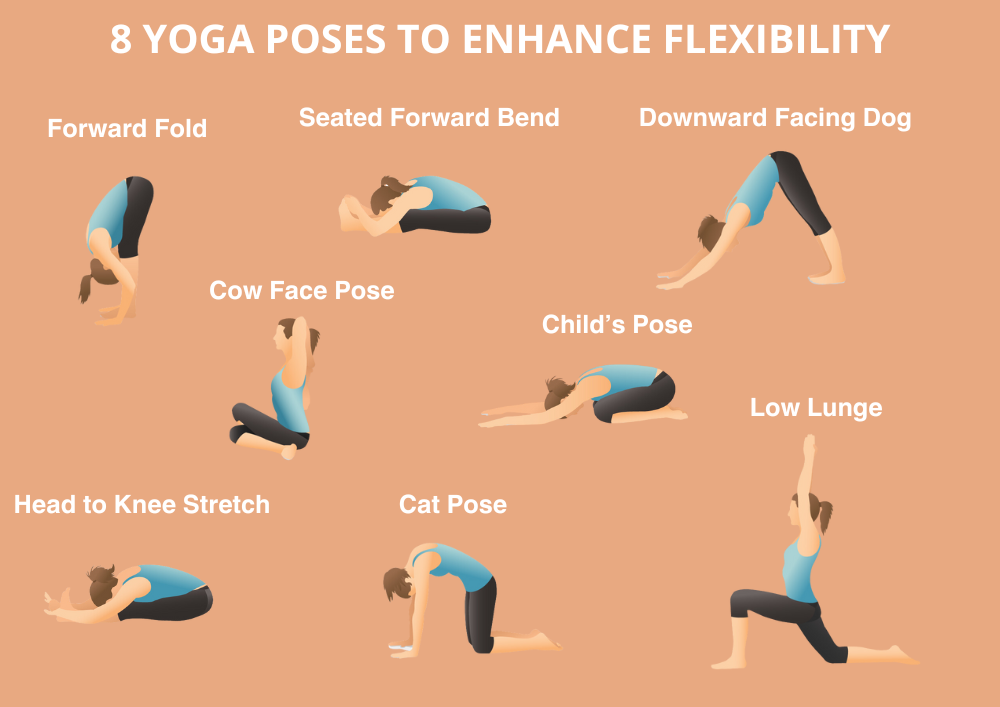
Yoga is a wonderful way to improve flexibility. It helps lengthen muscles and increase range of motion. Regular practice can lead to noticeable improvements. Below are some essential poses that focus on different body areas.
Forward Bend Variations
Forward bends are key for stretching the hamstrings and back. They release tension and improve mobility.
- Standing Forward Bend:Stand tall, then hinge at the hips. Let your torso fall forward.
- Seated Forward Bend:Sit with legs extended. Reach forward over your legs.
- Wide-Legged Forward Bend:Spread your legs wide. Bend forward, aiming to touch the floor.
Backbend Practices
Backbends open the front body and strengthen the back. They improve posture and flexibility.
- Cobra Pose:Lie on your stomach. Lift your chest using your arms.
- Bridge Pose:Lie on your back. Lift your hips towards the sky.
- Wheel Pose:Advanced pose. Push up to create a full arch with your body.
Twisting Postures
Twists detoxify the spine and organs. They improve flexibility and digestion.
- Seated Spinal Twist:Sit with one leg over the other. Twist gently to one side.
- Supine Twist:Lie on your back. Move one knee across your body.
- Revolved Triangle Pose:Stand in a wide stance. Twist your torso towards one leg.
Hip-opening Exercises
Hip-openers release tightness and enhance mobility. They are essential for overall flexibility.
- Pigeon Pose:Bring one leg forward. Stretch the opposite leg behind you.
- Butterfly Pose:Sit with soles of feet together. Let your knees fall outward.
- Lizard Pose:Step one foot forward. Lower your hips towards the ground.
Incorporating Breathing Techniques
Deep breathing enhances flexibility in yoga by relaxing muscles and increasing blood flow. Controlled breathing helps in deeper stretches and maintaining balance.
Incorporating breathing techniques into your yoga practice can greatly enhance flexibility. Breathing deeply helps relax muscles and release tension. This makes it easier to stretch further and hold poses longer. It’s not just about physical movement; it’s about connecting the mind and body. By focusing on the breath, you can improve concentration and calm the mind. This creates a more effective and enjoyable yoga experience.Understanding The Power Of Breath
Proper breathing is crucial in yoga. It increases oxygen flow, which energizes the body. When you breathe deeply, you supply muscles with more oxygen. This helps them function better and stretch more easily. Controlled breathing also lowers stress levels and reduces muscle stiffness.Practicing Diaphragmatic Breathing
Diaphragmatic breathing involves using the diaphragm to take deep breaths. This technique helps you breathe fully and efficiently. To practice, lie on your back with a hand on your belly. Inhale deeply through the nose, feeling your belly rise. Exhale slowly, letting the belly fall. Repeat this process to train your body to use the diaphragm.Utilizing Ujjayi Breathing
Ujjayi breathing is also known as ocean breath. It involves breathing through the nose with a slight constriction in the throat. This creates a soft, hissing sound. Ujjayi breathing helps maintain a steady pace and focus during yoga. It keeps the mind calm and the body energized.Syncing Breath With Movement
Linking breath with movement enhances flexibility. Inhale to prepare the body and exhale to move deeper into a pose. This method allows for smoother transitions between poses. It also reduces the risk of injury by ensuring controlled movements.Incorporating Breathing In Seated Poses
Seated poses offer a great opportunity to focus on breathing. Sit comfortably with a straight spine and close your eyes. Practice deep breathing, focusing on the rise and fall of the chest. This practice helps improve posture and flexibility over time.Integrating Breath Awareness In Daily Life
Make breath awareness a daily habit. Practice deep breathing outside of yoga sessions. This reinforces the connection between breath and flexibility. It can lead to greater overall well-being and mindfulness.
Credit: www.youtube.com
Creating A Consistent Yoga Routine
Building a consistent yoga routine enhances flexibility. Regular practice stretches muscles, improving range of motion and balance. Focus on poses that challenge and extend your limits gradually.
Creating a consistent yoga routine is essential for improving flexibility. A regular practice helps you progress steadily, fostering both physical and mental well-being. It requires dedication, but with the right approach, you can enjoy its benefits. Start by setting realistic goals, scheduling regular practice, and tracking your progress over time.Setting Realistic Goals
Setting achievable goals keeps you motivated. Begin with simple objectives, like increasing the duration of poses. Gradually aim for more complex poses as your flexibility improves. Clear goals prevent discouragement and help you celebrate small victories.Scheduling Regular Practice
Consistency is key. Plan your yoga sessions at convenient times. Whether it’s early morning or late evening, stick to your schedule. Regular practice builds a routine, making it easier to incorporate yoga into daily life. Consider short daily sessions or longer weekly practices.Tracking Progress Over Time
Monitor your improvement. Keeping a journal helps you see changes in your flexibility. Note down which poses feel easier or more challenging. Visual progress motivates you to keep going. Reflect on your journey, appreciating how far you’ve come.Common Mistakes And How To Avoid Them
Improving flexibility through yoga requires consistency and proper technique. Many people stretch too quickly, risking injury. Focus on slow, controlled movements and listen to your body’s signals to avoid common mistakes and enhance flexibility effectively.
Improving flexibility through yoga is a rewarding journey, but it’s easy to fall into common pitfalls that can hinder your progress. Understanding these mistakes and learning how to avoid them can make your practice more effective and enjoyable. Let’s dive into some common errors and practical strategies to overcome them.Pushing Too Hard, Too Fast
Many people think that achieving flexibility is all about pushing their limits. However, forcing your body into difficult poses can lead to injuries. Instead, focus on gradual progress. Listen to your body and respect its current capabilities.Neglecting Warm-up
Skipping warm-up is a mistake that can cost you. Cold muscles are less pliable and more prone to injury. Always start with a gentle warm-up to prepare your body. Simple stretches or a few sun salutations can be effective.Ignoring Proper Alignment
Proper alignment is crucial for effective yoga practice. Poor posture not only limits flexibility but can also cause strain. Pay attention to instructors’ cues or use mirrors to self-correct. This ensures you’re stretching the right muscles and joints.Holding Your Breath
Breath is a vital component of yoga, yet often overlooked. Holding your breath restricts oxygen flow and tension builds up. Practice deep, even breathing to enhance relaxation and flexibility. Synchronize your breath with each movement for better results.Lack Of Consistency
Inconsistency is a common barrier to progress. Flexibility improves with regular practice, not sporadic efforts. Schedule short yoga sessions throughout your week. Even 10-15 minutes daily can make a significant difference over time.Comparing Yourself To Others
It’s easy to compare your flexibility with others, especially in group classes. This mindset can lead to frustration and injury. Remember, yoga is a personal journey. Focus on your own progress and celebrate small achievements.Not Using Props
Props like blocks and straps are often underutilized. They can support your body and make poses more accessible. Incorporate them into your practice to gradually deepen stretches. Don’t view props as a sign of weakness, but as a tool for growth. By recognizing these common mistakes, you can enhance your yoga practice and improve flexibility safely. What mistake have you discovered in your own practice, and how did you overcome it?Integrating Flexibility With Strength
Improve flexibility with yoga by combining stretches with strength exercises. This balance enhances muscle endurance and joint mobility. Regular practice leads to better posture and reduced injury risk.
Integrating flexibility with strength is crucial for a balanced yoga practice. Improving flexibility is beneficial, but combining it with strength ensures stability. This approach helps prevent injuries and enhances overall performance. Integrating both elements offers a holistic yoga experience, empowering practitioners to achieve their goals effectively.Balancing Flexibility And Stability
Creating balance between flexibility and stability involves mindful practice. Flexibility allows your muscles to stretch, enhancing movement range. Stability keeps these movements controlled and safe. For example, practicing poses like Warrior II helps develop both. This pose stretches the legs and hips while engaging core muscles. Finding this balance fosters a strong, flexible body.Strengthening Supporting Muscles
Strengthening supporting muscles is vital for maintaining flexibility. These muscles provide the necessary support for flexible movements. Engaging them prevents strain and promotes healthy alignment. Poses like Plank and Boat help activate these muscles. Regular practice builds strength gradually, supporting your flexibility journey. This combination leads to a resilient body capable of handling varied yoga poses.Tools And Props To Aid Flexibility
Yoga is a great way to improve flexibility. Using tools and props can enhance your practice. They provide support, making stretches more accessible. Explore these props to aid your flexibility journey.
Yoga Blocks
Yoga blocks are versatile tools. They add support to your poses. Use them to reach the floor in standing poses. They help in maintaining balance and alignment.
Yoga Straps
Yoga straps help you stretch deeper. They are perfect for beginners. Use them in forward bends or seated stretches. They extend your reach safely.
Bolsters
Bolsters provide cushioning and support. Use them in restorative yoga sessions. They help relax and open the body. Perfect for deep breathing exercises.
Blankets
Blankets offer comfort and support. Fold them to use as a cushion. They provide extra padding for knees or hips. Ideal for seated poses or meditation.
Wall Support
Walls can be a great prop. Use them for balance and support. They help in poses like legs-up-the-wall. Perfect for improving alignment and focus.
Foam Rollers
Foam rollers aid in muscle relaxation. They improve flexibility and relieve tension. Use them to massage tight areas. Great for post-yoga recovery.
- Yoga Blocks
- Yoga Straps
- Bolsters
- Blankets
- Wall Support
- Foam Rollers

Credit: www.youtube.com
Listening To Your Body
Listening to your body is crucial when practicing yoga to improve flexibility. It’s not just about pushing through discomfort; it’s about understanding and respecting your body’s signals. By tuning into your body, you can enhance your yoga practice and avoid injury.
Recognizing Body Limits
Your body has its own unique limits. Recognizing these limits is key to safe and effective yoga practice. Take note of how your muscles feel during each pose. Are they tense or relaxed? Pay attention to any discomfort, as it’s often a sign to ease up. The goal is to gently challenge your body without overstepping its boundaries.
Consider your personal experiences with flexibility. Have you ever pushed too hard and ended up sore? Reflecting on past practices can help you gauge your current limits better. Always remember, improvement comes with patience and consistency.
Modifying Poses Safely
Modifying poses doesn’t mean you’re taking the easy way out. Instead, it’s a smart approach to practice yoga safely. Use props like blocks or straps to support your body in challenging poses. This allows you to maintain proper alignment and reduces strain.
Think about how you can adapt poses to fit your current ability. Can you bend your knees slightly in a forward fold? Or use a wall for balance in a standing pose? These small adjustments can make a big difference. Embrace modifications as part of your journey toward greater flexibility.
What modifications have helped you feel more comfortable in yoga? Reflect on these insights and continue to adjust as needed. Remember, yoga is about progress, not perfection.
Frequently Asked Questions
What Are The Benefits Of Yoga For Flexibility?
Yoga enhances flexibility by stretching muscles and improving joint mobility. Regular practice leads to better posture, reduced muscle tension, and increased range of motion. It also aids in injury prevention and promotes relaxation, offering both physical and mental benefits, making it an ideal choice for flexibility improvement.
How Often Should I Practice Yoga For Flexibility?
For optimal flexibility gains, practice yoga 3 to 5 times weekly. Consistency is crucial to see progress. Each session should last 30 to 60 minutes. Gradually increase duration and intensity as your flexibility improves. Listen to your body and avoid overstretching to prevent injuries.
Can Beginners Improve Flexibility With Yoga?
Yes, beginners can improve flexibility with yoga. Start with basic poses and gradually advance. Consistent practice is key to progress. Yoga adapts to all levels, offering modifications for each pose. With patience and dedication, noticeable improvements in flexibility can be achieved.
Which Yoga Poses Are Best For Flexibility?
Key poses for flexibility include Downward Dog, Forward Fold, and Pigeon Pose. These poses target various muscle groups and enhance joint mobility. Incorporating them into your routine helps improve flexibility. Ensure proper form and breathing for effective results and gradual progression.
Conclusion
Yoga helps improve flexibility with consistent practice. Start slowly and listen to your body. Stretching regularly aids muscle relaxation. Use breathing techniques during poses. This enhances calmness and focus. Try different yoga styles for variety and challenge. Balance and strength grow over time.
Yoga can boost mental health too. Find a routine that suits your lifestyle. Stay patient with your progress. Flexibility improves gradually. Remember to enjoy the journey. Yoga is not just physical. It nurtures the mind and spirit. Keep practicing and stay committed.
Your body will thank you.