Imagine this: You’re driving down a scenic road, the sun is shining, and your favorite song is playing. Suddenly, the car in front of you slams on the brakes.
In that split second, your seatbelt becomes your best ally. But how does this simple strap protect you from injury? Understanding the science behind seatbelts can be life-saving, and it’s more fascinating than you might think. By reading this article, you’ll discover the secrets of how seatbelts work to keep you safe, potentially transforming the way you view this everyday safety feature.
You’ll gain insights that could make your next drive a safer experience. Ready to explore the unseen power of your seatbelt? Let’s dive in!

Credit: www.facebook.com
Seatbelt Mechanics
Seatbelts save lives by holding passengers in place during sudden stops or accidents. They spread the force across stronger body parts. This reduces the risk of serious injuries.
Understanding how seatbelts work can help you appreciate their role in preventing injuries during a car accident. Seatbelts are a critical safety feature in vehicles, designed to protect passengers by restraining them in their seats during sudden stops or collisions. Their mechanics are fascinating, and they incorporate several key components and designs that enable them to function effectively.Components And Design
Seatbelts consist of several parts that work together seamlessly. The webbing is the durable fabric strap that secures you in place. Have you ever noticed how sturdy it feels? That’s because it’s made from high-strength materials like polyester. The buckle is another essential part. It’s designed for quick and easy release, yet it holds firmly during a crash. The retractor is the mechanism that allows the belt to pull out and retract smoothly, keeping the belt snug against your body without being uncomfortable. Lastly, the pretensioner comes into play during a collision. It tightens the belt instantly, removing any slack and ensuring you are securely held in place. This combination of components is meticulously designed to offer maximum protection.Function During A Collision
During a collision, seatbelts act as your primary defense against injury. Imagine you’re driving and suddenly your car stops abruptly. Without a seatbelt, your body’s momentum would continue, potentially leading to severe injury. Seatbelts distribute the forces from the collision across sturdier parts of your body, like the pelvis and chest. This distribution minimizes the impact on more vulnerable areas, such as your head or neck. Have you ever wondered why seatbelts are sometimes uncomfortable when you lean forward? That’s the locking mechanism at work. It ensures the belt stays tight when it detects rapid deceleration, protecting you in a crash. What would happen if seatbelts didn’t work this way? The consequences could be devastating, with a higher risk of being ejected from the vehicle or experiencing significant trauma. The mechanics of seatbelts are a testament to thoughtful design and engineering focused on your safety.Physics Of Car Crashes
Car crashes happen in an instant. The physics behind them is complex. Understanding this can explain how seatbelts save lives. Forces and motion play key roles in these events.
Impact Forces Explained
During a crash, cars stop suddenly. The force from this impacts passengers. Without seatbelts, bodies continue moving forward. This can lead to severe injuries. Seatbelts distribute these forces across stronger parts of the body. This helps reduce injury.
Role Of Momentum And Inertia
Momentum keeps moving objects in motion. Inertia resists changes in motion. During a crash, momentum wants to keep you moving. Inertia fights against stopping suddenly. Seatbelts counteract these forces. They hold you in place and slow down your movement. This minimizes harm.
Injury Reduction
Seatbelts save lives by keeping passengers secure during sudden stops or crashes. They distribute force over the body, reducing injury risk. By preventing ejection from the vehicle, seatbelts significantly lower the chances of serious harm.
Injury Reduction is one of the primary benefits of wearing seatbelts. They play a crucial role in keeping passengers safe during a crash. Seatbelts are designed to hold the body in place, minimizing movement. This helps prevent the body from hitting the interior parts of the vehicle. By reducing the impact force, seatbelts significantly lower the risk of injury. Understanding how seatbelts work can help appreciate their importance.Common Injuries Without Seatbelts
Without seatbelts, passengers face a higher risk of severe injuries. Head injuries are quite common in unbelted passengers. These can lead to concussions or traumatic brain injuries. Chest and abdominal injuries occur due to hitting the dashboard or steering wheel. Spinal injuries can result from being thrown from the seat. Limb fractures often happen when passengers are tossed around inside the vehicle. Internal bleeding is also a serious risk without proper restraint.How Seatbelts Minimize Harm
Seatbelts keep the body secured during sudden stops. They distribute the force of impact across the stronger parts of the body. This reduces the likelihood of serious injuries. The shoulder belt helps in restraining upper body movement. The lap belt prevents the lower body from sliding forward. Together, they keep the passenger in place. This reduces the chance of hitting hard surfaces inside the car. Seatbelts also decrease the risk of being ejected from the vehicle.
Credit: www.wikiwand.com
Types Of Seatbelts
Seatbelts come in various types, including lap belts, shoulder belts, and three-point belts. Each type works by distributing force across strong parts of the body during sudden stops or crashes, reducing the risk of injury. By keeping passengers securely in place, seatbelts minimize the chances of hitting hard surfaces inside the vehicle.
Seatbelts are crucial in keeping you safe on the road. They are designed to hold you securely in your seat during sudden stops or collisions, minimizing the risk of injury. But did you know that there are different types of seatbelts, each offering unique protection? Understanding these types can help you appreciate how they work to keep you safe.Lap Belts
Lap belts are the simplest form of seatbelt. They wrap around your waist, securing you in your seat. Imagine being in a car that suddenly stops; without a lap belt, you could be thrown forward. This belt helps prevent such scenarios by holding you in place. While effective, lap belts offer limited upper body restraint, making them less ideal for high-speed impacts.Three-point Belts
Three-point belts are commonly found in most vehicles today. They provide a strap over your shoulder and across your lap, creating three points of contact. This design distributes the forces of a collision across the strongest parts of your body. Have you ever noticed how you feel snug and secure with a three-point belt? That’s because it helps to prevent your body from twisting or moving excessively during an accident.Advanced Restraint Systems
Advanced restraint systems are the future of seatbelt technology. These systems integrate airbags and sensors to offer enhanced protection. Consider a scenario where your car detects an impending collision; advanced systems can adjust the tension of the seatbelt for optimal safety. Such innovations ensure that the belt works in harmony with other safety features, providing comprehensive protection. Wouldn’t you want to be in a car that anticipates danger and acts to protect you?Seatbelt Technology Innovations
Seatbelt technology has come a long way in enhancing passenger safety. Innovations in seatbelt design focus on reducing injury during accidents. These advancements aim to provide better protection and comfort. Let’s explore some key innovations in seatbelt technology.
Pre-tensioners And Load Limiters
Pre-tensioners tighten the seatbelt instantly during a collision. This reduces the slack and holds passengers firmly in place. By doing so, it minimizes forward movement. Load limiters then come into play. They release a bit of belt tension after the initial impact. This helps in reducing the force on the chest, lowering injury risk. Both work together to provide a balance of restraint and flexibility.
Smart Seatbelt Systems
Smart seatbelt systems use sensors and data for better protection. They adapt to different situations, providing optimal restraint. For instance, they can adjust the tension based on the passenger’s weight. Some systems integrate with airbags for coordinated safety measures. This intelligent approach enhances the overall safety of passengers.
Legislation And Seatbelt Usage
Seatbelt usage is not just a personal choice; it’s a legal requirement that has saved countless lives. Understanding the legislation behind seatbelt use can help you appreciate its importance in public safety. Let’s explore how laws and regulations have shaped seatbelt usage and its impact on society.
Laws And Regulations
Seatbelt laws vary across the globe, but their goal is universal: to enhance safety for everyone on the road. In many countries, wearing a seatbelt is mandatory for all passengers in a vehicle, regardless of their seating position. Some regions even impose hefty fines for non-compliance. These regulations are a result of extensive research and lobbying by safety advocates.
Consider how these laws have evolved over time. Initially, seatbelt use was encouraged but not enforced. Over the years, governments recognized the undeniable benefits and made it compulsory. When you buckle up, you’re not just following a law; you’re embracing a practice that has been proven to reduce fatalities.
Impact On Public Safety
Seatbelt legislation has dramatically improved public safety. Statistics show that seatbelts reduce the risk of death and serious injury by about 50% in car accidents. This is a powerful testament to their effectiveness. When you wear a seatbelt, you significantly increase your chances of surviving a crash.
Think about the ripple effect on society. Safer roads mean fewer casualties, less strain on healthcare systems, and more peace of mind for drivers and passengers alike. The next time you fasten your seatbelt, consider how many lives have been preserved because of this simple act. How might our roads look without such legislation?
Encouraging seatbelt use is more than just enforcing laws—it’s about fostering a culture of safety. Your choice to wear a seatbelt contributes to a safer environment for everyone. So, next time you get in a car, remember the impact your small action can have on public safety.
Seatbelt Myths And Facts
Seatbelts are essential for safety on the road. Yet, many myths surround their use. These myths can mislead drivers and passengers. Understanding the facts helps ensure safety. Let’s explore some common misconceptions and the truth behind them.
Debunking Common Misconceptions
Some believe seatbelts cause more harm in an accident. This is false. Seatbelts prevent serious injuries by keeping you in place. Another myth claims airbags are enough protection. Airbags are a supplement, not a replacement. They work best with seatbelts. People also think short trips don’t require seatbelts. Most accidents happen close to home. Always buckle up, no matter the distance.
Importance Of Proper Use
Proper seatbelt use is crucial for safety. The belt should fit snugly across your hips and chest. Do not let it rest on your stomach. Ensure it is not twisted. Twisted belts can reduce effectiveness. Never place the shoulder belt under your arm or behind your back. This can cause severe injuries in a crash. Adjust the seatbelt to your height. Make sure children use appropriate restraints. Their safety depends on it.
Global Seatbelt Statistics
Seatbelts play a crucial role in road safety worldwide. Understanding global seatbelt statistics highlights their impact and effectiveness. Seatbelts save lives and reduce injury risks during accidents. Knowing how they are used globally can help promote better safety practices.
Usage Rates Worldwide
Seatbelt usage varies across different countries. Some regions have higher compliance due to strict laws. In Europe, usage rates are often above 90%. This is due to strong enforcement and public awareness campaigns. In contrast, some developing countries show lower usage rates. Factors like lack of enforcement and education affect these numbers.
Despite differences, a global trend shows increasing seatbelt usage. Efforts in education and enforcement contribute to this rise. Understanding these rates can help improve global road safety strategies.
Effectiveness In Different Regions
Seatbelt effectiveness can differ by region due to various factors. In high-income countries, seatbelts significantly reduce fatalities. These regions often have better vehicle safety standards and road conditions. Research shows that seatbelts reduce serious injuries by up to 50%.
In low-income regions, effectiveness might be lower. Poor road conditions and vehicle standards impact seatbelt performance. Despite challenges, seatbelts still offer vital protection. Global efforts aim to improve conditions and enhance seatbelt effectiveness.
Understanding regional effectiveness helps tailor safety campaigns. It ensures that strategies are suitable for local needs and conditions.
Future Of Seatbelt Safety
Seatbelts save lives by keeping passengers secured during sudden stops or crashes. They prevent injuries by distributing force across stronger parts of the body. This reduces the risk of serious harm, like head or chest injuries.
The future of seatbelt safety looks promising with advancements in technology. Seatbelts have saved countless lives, but there is always room for improvement. Innovations in this field aim to enhance protection and comfort for passengers. The goal is to reduce injuries further and adapt to modern vehicle designs.Emerging Trends
The automotive industry constantly explores new ways to improve safety. One trend is the integration of smart technology in seatbelts. These systems can monitor the tension and position of the belt. They adjust automatically for optimal safety. This ensures the belt is always snug, but not too tight. Another trend is the use of advanced materials. Manufacturers are experimenting with lightweight, strong fibers. These materials can withstand greater forces during a crash. This means seatbelts can be more effective in keeping passengers secure.Potential Innovations
Seatbelt airbags are being developed to provide extra protection. These airbags are built into the seatbelt itself. They inflate during a crash, cushioning the impact on the chest and ribs. This can significantly reduce injuries in a collision. Adaptive seatbelt systems are another exciting innovation. These systems analyze the passenger’s weight and height. They adjust the belt’s tension and position accordingly. This personalized approach enhances comfort and safety for everyone. New buckle designs are also being explored. Magnetic or quick-release buckles could make seatbelts easier to use. They allow passengers to fasten and unfasten their seatbelts with ease. This could encourage more people to use seatbelts consistently. These advancements aim to make seatbelts more effective and user-friendly. As technology evolves, seatbelt safety will continue to improve. This is good news for drivers and passengers everywhere.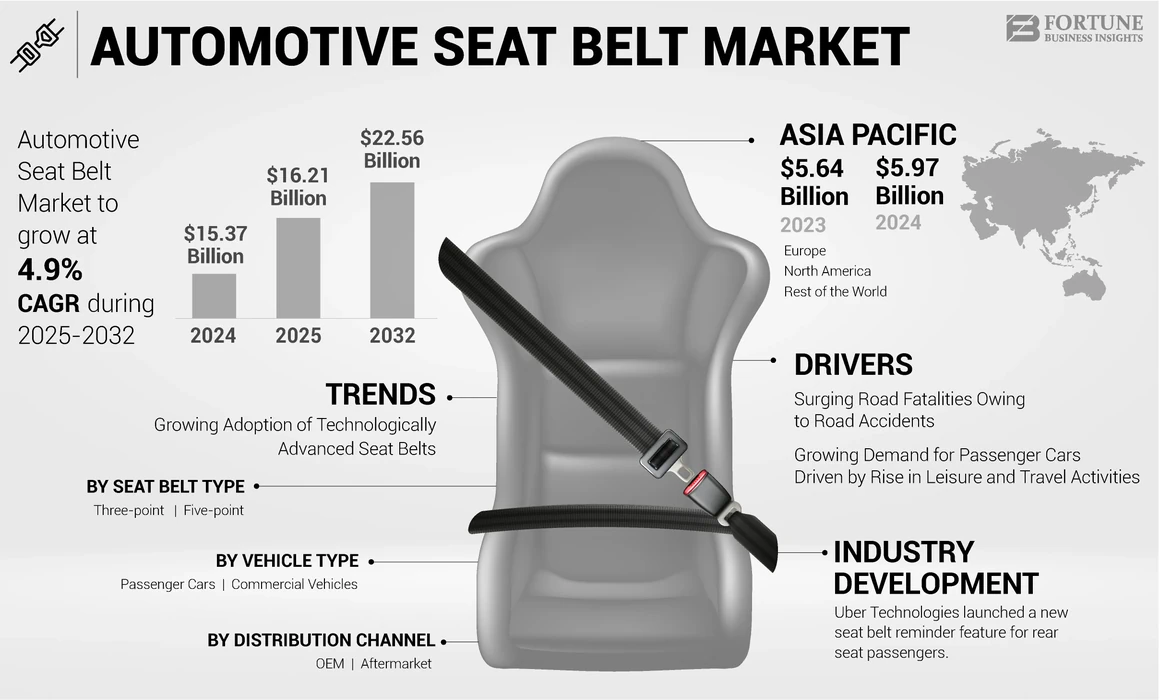
Credit: www.fortunebusinessinsights.com
Frequently Asked Questions
How Do Seatbelts Save Lives In Car Accidents?
Seatbelts save lives by securing passengers during sudden stops. They reduce the risk of being ejected from the vehicle. By distributing force across stronger parts of the body, they minimize injury. Seatbelts also prevent collisions with the dashboard or windshield, significantly reducing fatalities and serious injuries during crashes.
Why Are Seatbelts Important In A Crash?
Seatbelts are crucial in a crash because they restrain passengers. They keep occupants in place, preventing harmful impacts. By absorbing force, seatbelts reduce injury. They also help to control the body’s movement, minimizing contact with hard surfaces inside the vehicle, thus lowering the risk of severe harm.
How Do Seatbelts Reduce Injury Severity?
Seatbelts reduce injury severity by spreading crash forces across the body’s stronger areas. They prevent sudden movements, protecting vital organs. By keeping passengers secured, seatbelts limit contact with harmful parts of the vehicle. This reduces the likelihood of serious injuries like head trauma, fractures, and internal damage.
Are Seatbelts Effective In All Types Of Crashes?
Seatbelts are effective in most types of crashes, including frontal, side, and rear collisions. They hold passengers in place, lessening impact severity. Although not foolproof, they significantly decrease the risk of injuries. Seatbelts work best when combined with airbags and other safety features, providing comprehensive protection.
Conclusion
Seatbelts save lives. They reduce injury risks in car crashes. By securing passengers, seatbelts prevent sudden movements. They keep you in place during impact. This minimizes the chance of hitting hard surfaces. Proper seatbelt use is crucial. It ensures safety for all passengers.
Always buckle up before driving. Make it a habit. Encourage others to do the same. Safety should always come first. Remember, seatbelts are simple but effective. They protect you and your loved ones. Stay safe on the road. Prioritize wearing your seatbelt.
It’s a small step with big benefits.