
Have you ever wondered if a simple jump rope could be your secret weapon for building muscle? You’re not alone.
Many fitness enthusiasts are curious about the real benefits of this classic exercise. It might seem like child’s play, but jumping rope is a powerhouse workout that goes beyond just burning calories. Imagine sculpting lean muscle, boosting your endurance, and enhancing your coordination—all from a single piece of equipment.
Intrigued? You’re about to discover whether jumping rope truly packs the punch it promises. Keep reading to find out how this humble tool can transform your fitness routine and help you achieve the muscular physique you desire.

Credit: www.youtube.com
Jump Rope Basics
Jump rope isn’t just for children. It’s a versatile exercise tool. Many people use it for fitness and muscle building. This simple equipment has gained popularity in workouts. Learning the basics can be very rewarding.
Benefits Of Jump Rope
Jumping rope boosts cardiovascular health. It burns calories quickly. It’s great for coordination and balance. You can do it almost anywhere. It’s a full-body workout. Your legs, core, and arms engage with every jump.
Types Of Jump Ropes
There are different jump ropes for various needs. Speed ropes are lightweight. They’re perfect for fast-paced routines. Weighted ropes add resistance. They help in muscle building. Beaded ropes offer durability. They’re ideal for beginners.
Proper Jump Rope Technique
Stand tall with feet together. Hold the rope handles lightly. Swing the rope over your head. Jump as it nears your feet. Land softly on the balls of your feet. Keep your elbows close to your body. Practice makes perfect. Start slow and increase speed over time.
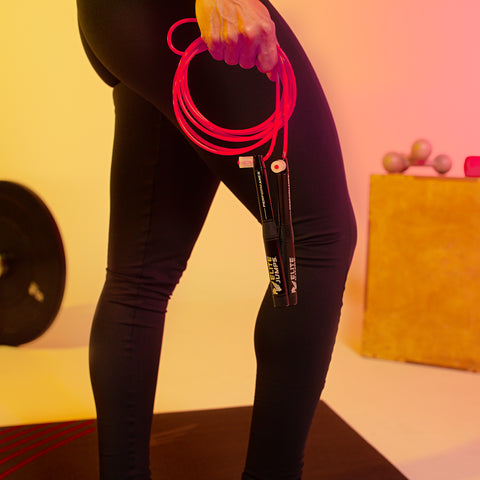
Credit: elitejumps.co
Muscle Engagement
Jump rope is often viewed as a simple cardio exercise, but its muscle engagement capabilities may surprise you. The rhythmic motion not only boosts your heart rate but also works various muscle groups. As you jump, each part of your body plays a crucial role, turning this seemingly basic activity into a comprehensive workout.
Primary Muscle Groups Targeted
Jumping rope primarily targets your calves and quadriceps. These muscles bear the brunt of each leap, propelling you off the ground. As your feet land, they absorb the impact, building strength and endurance over time.
Additionally, your shoulders and forearms get involved, especially as you swing the rope. The constant motion engages these muscles, improving their coordination and stamina.
Secondary Muscle Activation
While your legs and arms do most of the work, jumping rope also activates secondary muscles. Your core stabilizes your body, maintaining balance with each jump. This engagement helps tone your abs and obliques without the need for crunches.
Your back muscles also get involved, supporting your posture and ensuring fluid movement. Over time, this can enhance your overall muscle definition and flexibility.
Comparing Jump Rope To Other Exercises
Jump rope holds its own when compared to exercises like running or cycling. Unlike these activities, it provides a full-body workout, engaging multiple muscle groups simultaneously. This can lead to more efficient muscle building and calorie burning.
While weightlifting focuses on specific muscles, jump rope offers a balanced approach. It enhances cardiovascular health while subtly building muscle, making it a versatile addition to your fitness routine.
Think about your workout goals. Could jump rope be the missing piece in your fitness puzzle? Give it a try and see how it complements your other exercises.
Strength Building Potential
Jump rope is more than a cardio workout. It offers strength-building potential. Engaging multiple muscle groups, it provides a full-body exercise. With proper techniques, you can build muscle effectively. Let’s explore how jump rope can enhance your strength.
Resistance Variations
Using different ropes can change resistance levels. Weighted ropes add intensity. They require more effort from your muscles. This engages your arms, shoulders, and core. Speed ropes focus on agility. They enhance coordination and quick movements. Both types can build muscle in unique ways.
Progressive Overload With Jump Rope
Progressive overload is key for muscle growth. Increase the duration of your jump sessions. Add more jumps each time. Use heavier ropes as you get stronger. This continuous challenge boosts muscle adaptation. Over time, your muscles become stronger.
Enhancing Muscle Endurance
Jump rope improves muscle endurance. Longer sessions train muscles to sustain activity. Your legs, especially calves, benefit greatly. They gain the ability to perform for extended periods. Consistent practice leads to better endurance and muscle tone. Jump rope effectively combines strength and stamina.
Toning Benefits
Jump rope can enhance muscle tone by engaging various muscle groups. This cardio workout targets calves, thighs, and arms effectively. Regular jumping sessions contribute to a leaner, well-defined physique.
Jump rope is more than a childhood pastime; it’s a powerhouse workout tool that can significantly enhance your fitness routine. While many associate it primarily with cardiovascular benefits, its capacity for toning muscles is often underestimated. By incorporating jump rope into your workout, you can experience remarkable changes in muscle tone, definition, and symmetry. Let’s delve into how jumping rope helps in achieving these toning benefits.Cardiovascular And Muscle Toning
Jump rope is a dynamic exercise that combines both aerobic and anaerobic elements. This means while you are getting your heart rate up, you’re also engaging various muscle groups. The repetitive motion works your calves, quads, and glutes, giving them a leaner appearance. You might notice your arms and shoulders getting more defined. This is because they help maintain rhythm and balance during the workout. The consistent action helps tone these areas without the need for heavy weights.Fat Loss And Muscle Definition
An effective jump rope session can burn up to 10 calories a minute. This high-calorie burn contributes to fat loss, revealing the muscles you’ve been working hard to tone. As fat layers diminish, muscle definition becomes more apparent. Consistency is key. Integrating jump rope into your regular routine amplifies these effects, helping you achieve a more sculpted look over time. Have you ever wondered why boxers swear by the jump rope? It’s because it keeps them lean and defined.Improving Muscle Symmetry
Jumping rope is a bilateral exercise, meaning it works both sides of your body equally. This is crucial for developing muscle symmetry, which is often overlooked in other workouts. By ensuring both sides of your body are equally engaged, you avoid muscle imbalances. The rhythmic nature of jump rope helps in coordinating your muscles, enhancing balance and stability. This not only improves your physique but also your overall athletic performance. Imagine achieving a more harmonious body structure simply by adding jump rope to your routine. Incorporating jump rope into your workout plan could be the game-changer you’ve been looking for. Have you tried jumping rope for muscle toning? What changes have you noticed in your body?Incorporating Jump Rope Into Workouts
Jump rope can effectively build muscle strength and endurance. It targets the legs, core, and upper body. Integrating it into workouts enhances cardiovascular health while toning muscles.
Jump rope isn’t just child’s play. It’s a powerful tool that can elevate your workouts, adding a cardio punch and enhancing muscle tone. This simple equipment offers a dynamic way to spice up your fitness routine. But how can you integrate it effectively to build muscle? Let’s dive into some actionable ways to include jump rope in your workouts.Sample Jump Rope Workout Plans
A structured plan can make all the difference. Start with a basic routine:- Warm-up with a 5-minute light jump rope session.
- Alternate between 30 seconds of fast-paced jumping and 1 minute of rest for 10 rounds.
- Cool down with stretching exercises to soothe muscles.
Combining With Strength Training
Pairing jump rope with strength exercises can yield fantastic results. Try this combination:- Start with 3 sets of 10 push-ups.
- Follow with 2 minutes of jump rope.
- Move to 3 sets of 15 squats, then back to jumping for another 2 minutes.
Tips For Maximizing Results
For optimal results, consistency is key. Here’s how to make the most of your jump rope sessions:- Maintain proper posture to avoid injuries.
- Gradually increase intensity as your stamina builds.
- Stay hydrated and fuel your body with nutritious foods.
Common Misconceptions
Jump rope is often viewed as a simple exercise tool. Many believe it’s only for cardio. This leads to misunderstandings about its muscle-building potential. Let’s clear up these misconceptions.
Myths About Jump Rope And Muscle Gain
Some think jump rope doesn’t build muscle. They see it as only burning calories. They also believe it won’t engage muscles effectively. This isn’t true. Jump rope can target various muscle groups. It works your calves, shoulders, and even your core. Just like any workout, form and technique matter.
Addressing Concerns And Misunderstandings
People worry jump rope is too basic. They think it won’t challenge muscles. But jump rope can be intense. Changing speed and techniques can increase difficulty. This variation can lead to muscle growth over time. It’s more than just hopping up and down.
Another concern is injury risk. Proper technique reduces this risk. Warming up and cooling down are also important. These steps help prevent strain and muscle injury.
Scientific Evidence And Studies
Studies support muscle building with jump rope. Research shows increased muscle endurance. It also improves muscle definition over time. Jump rope workouts can be as effective as other exercises. This includes weightlifting and running.
Experts agree on its benefits. Jump rope is efficient for muscle tone and strength. It’s a valuable addition to any workout routine. Scientific evidence backs its effectiveness.

Credit: www.tiktok.com
Frequently Asked Questions
Can Jump Rope Help In Muscle Building?
Jump rope can aid in muscle building by engaging multiple muscle groups. It primarily targets the calves, thighs, shoulders, and arms. Regular jumping can lead to muscle toning and improved endurance. However, for significant muscle growth, it should be combined with strength training exercises.
Which Muscles Does Jump Rope Target?
Jump rope mainly targets the calves, quadriceps, hamstrings, glutes, and shoulders. It also engages the forearms and core muscles. The repetitive motion helps in muscle toning and improves coordination. Consistent jump rope routines can enhance muscle endurance and definition over time.
Is Jump Rope Better Than Weightlifting For Muscles?
Jump rope and weightlifting serve different purposes. Jump rope enhances cardiovascular fitness and muscle endurance. Weightlifting focuses on building muscle mass and strength. For comprehensive fitness, combining both can yield optimal results. Each has unique benefits that complement the other in a balanced workout routine.
How Often Should I Jump Rope For Muscle Gain?
For muscle gain, aim to jump rope three to five times weekly. Each session should last 15 to 30 minutes. Consistency is key for noticeable results. Integrating jump rope with strength training can enhance muscle development and overall fitness.
Conclusion
Jump rope workouts offer great benefits for muscle building. They engage multiple muscle groups, enhancing strength and endurance. Regular jumping builds lean muscle, especially in legs, core, and arms. This activity also boosts cardiovascular health. It enhances coordination and agility, contributing to overall fitness.
Consistent practice leads to noticeable muscle definition. For best results, combine jump rope with strength training. Balanced routines maximize muscle growth and fitness gains. Give jump rope a try for a fun and effective workout. Enjoy the journey to stronger muscles and a healthier you.
Keep jumping, and watch your muscles grow!