

Last updated: November 9, 2026 · By the ThriveWay Fitness Editorial Team
Quick answer
The Manduka PRO is the best yoga mat for most people who practice regularly: dense 6 mm cushioning, excellent stability and a reputation for lasting years. If grip is your top priority, the Liforme mat adds alignment markers and a very grippy surface; JadeYoga Harmony is the natural-rubber favorite. On a budget, the Gaiam Premium 6mm is a reliable starter mat.
In this guide
- Best Yoga Mats Compared
- The 7 Best Yoga Mats in 2026
- How to Choose a Yoga Mat
- Yoga Mat Materials Compared
- Who Should Buy Which Mat?
- Yoga Mat Accessories Worth Adding
- Caring for Your Mat
- How We Chose These Mats
- Yoga Mat Sizes: Length and Width
- Thickness Guide in Brief
- Common Mistakes When Buying a Yoga Mat
- Price Tiers
- Alternatives to a Traditional Yoga Mat
- Breaking In and Getting the Best Grip
- How Long Should a Yoga Mat Last?
- Yoga Mat Buying Checklist
- Frequently Asked Questions
- Final Recommendation
The right yoga mat makes practice safer and more comfortable: it keeps hands and feet from sliding, cushions knees and wrists, and stays put on the floor. The wrong one slips in downward dog, flakes apart, smells or feels like practicing on a sponge. The differences come down to material, thickness, texture and density.
We compared materials, thickness, dimensions, grip technology and durability claims from manufacturers on Amazon, along with consistent themes in owner feedback. We haven’t tested every mat in a studio ourselves, so we focus on who each mat suits best and where it falls short.
Best Yoga Mats Compared
| Yoga mat | Best for | Material / thickness | |
|---|---|---|---|
| Manduka PRO 6mm | Best overall / most durable | 6 mm dense PVC | Check Price |
| Liforme Classic | Best grip & alignment | 4.2 mm, alignment markers | Check Price |
| JadeYoga Harmony | Best natural rubber | 3/16″ open-cell rubber | Check Price |
| Gaiam Dry-Grip | Best for hot yoga | Moisture-wicking topcoat | Check Price |
| Gaiam Premium 6mm | Best budget | 6 mm 6P-free PVC | Check Price |
| Fitvids 1/2″ Exercise Mat | Most cushioned | 1/2″ high-density foam | Check Price |
| Manduka eKO SuperLite | Best travel mat | 1.5 mm foldable rubber | Check Price |
The 7 Best Yoga Mats in 2026
Best Overall
1. Manduka PRO Yoga Mat (6mm)

Manduka PRO Yoga Mat 6mm
Check Price on AmazonPrice and availability change often — check Amazon for current details.
Best suited for: daily practitioners and teachers who want a mat that lasts for years.
The Manduka PRO is one of the most respected mats in yoga. Its ultra-dense 6 mm cushioning protects joints while staying stable for balancing poses, and a dotted bottom keeps it from sliding. The closed-cell surface helps keep sweat from soaking in. The trade-off: it’s heavy and can feel slippery until broken in.
- Thickness: 6 mm, ultra-dense
- Bottom: no-slip dot pattern
- Surface: closed-cell, easy to wipe
Pros
- Exceptional durability
- Supportive yet stable
- Easy to clean
Limitations
- Heavy to carry
- Needs a break-in period for best grip
Best Grip & Alignment
2. Liforme Classic Yoga Mat

Liforme Classic Yoga Mat
Check Price on AmazonPrice and availability change often — check Amazon for current details.
Best suited for: vinyasa and alignment-focused practitioners who want serious grip.
Liforme’s “GripForMe” surface is known for strong grip, even as you warm up, and its patented “AlignForMe” markers help you position hands and feet consistently. It comes with a carry bag. It’s a premium price, and the surface can show marks over time.
- Surface: GripForMe material
- Feature: AlignForMe alignment markers
- Extras: yoga bag
Pros
- Excellent grip
- Helpful alignment guides
- Eco-friendly materials
Limitations
- Expensive
- Surface can mark with heavy use
Best Natural Rubber
3. JadeYoga Harmony Mat

JadeYoga Harmony Yoga Mat
Check Price on AmazonPrice and availability change often — check Amazon for current details.
Best suited for: eco-conscious yogis who want natural rubber grip.
JadeYoga Harmony is made from natural, open-cell rubber that provides strong traction and cushioning. At 3/16 inch thick and 24 inches wide (68″ or 74″ lengths), it balances comfort and stability. Natural rubber has a scent at first and isn’t suitable for people with latex allergies.
- Material: natural open-cell rubber
- Thickness: 3/16″ (~4.8 mm)
- Size: 24″ wide, 68″ or 74″ long
Pros
- Excellent grip
- Natural material
- Comfortable cushioning
Limitations
- Contains latex
- Absorbs sweat; needs regular cleaning
Best for Hot Yoga
4. Gaiam Dry-Grip Yoga Mat

Gaiam Dry-Grip Yoga Mat
Check Price on AmazonPrice and availability change often — check Amazon for current details.
Best suited for: hot yoga and sweaty sessions.
Gaiam’s Dry-Grip mat uses a moisture-wicking topcoat designed to stay non-slip as you sweat. It cushions hands, knees and wrists and works for yoga, Pilates and stretching.
- Surface: moisture-wicking topcoat
- Use: hot yoga, Pilates, stretching
Pros
- Stays grippy when wet
- Comfortable cushioning
- Attractive designs
Limitations
- Topcoat can wear with heavy use
- Not as dense as premium mats
Best Budget
5. Gaiam Premium Yoga Mat (6mm)

Gaiam Premium 6mm Print Yoga Mat
Check Price on AmazonPrice and availability change often — check Amazon for current details.
Best suited for: beginners and casual practitioners.
Gaiam’s Premium mat is a long-time beginner favorite. It’s lightweight but extra-thick at 6 mm, with a sticky textured surface for traction. It’s made from PVC free of six common phthalates (6P-free).
- Thickness: 6 mm
- Material: 6P-free PVC
- Surface: textured, sticky
Pros
- Affordable
- Lightweight and cushioned
- Many designs
Limitations
- Less durable than premium mats
- Can feel slippery when sweaty
Most Cushioned
6. Fitvids 1/2-Inch Thick Exercise Yoga Mat

Fitvids 1/2 inch Thick Exercise Yoga Mat
Check Price on AmazonPrice and availability change often — check Amazon for current details.
Best suited for: sensitive knees, floor exercises, stretching and Pilates.
At half an inch thick, this high-density foam mat is much softer than standard yoga mats. It measures 71 × 24 inches, has a double-sided non-slip surface and includes a carrying strap.
- Thickness: 1/2″
- Size: 71 × 24 in
- Extras: carrying strap
Pros
- Very comfortable for knees
- Affordable
- Easy to wipe clean
Limitations
- Too soft for stable standing balances
- Foam compresses over time
Best Travel Mat
7. Manduka eKO SuperLite Travel Mat
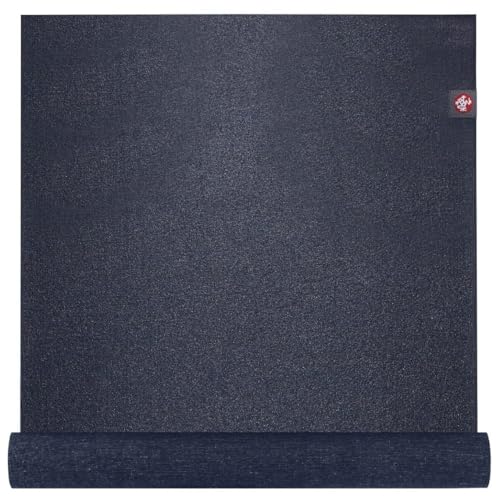
Manduka eKO SuperLite Travel Yoga Mat
Check Price on AmazonPrice and availability change often — check Amazon for current details.
Best suited for: travelers or using on top of studio mats.
The eKO SuperLite is only 1.5 mm thick and folds to fit in a suitcase. It’s made from natural tree rubber with a textured grip. Use it alone on carpet or hotel floors, or layered over a studio mat for hygiene.
- Thickness: 1.5 mm
- Size: 71 × 24 in
- Material: natural tree rubber
Pros
- Folds into a bag
- Good grip for its thinness
- Lightweight
Limitations
- Very little cushioning
- Contains natural rubber (latex)
How to Choose a Yoga Mat
1. Thickness
Standard mats are around 3–5 mm; 6 mm adds cushioning; 1/2″ foam mats are for comfort over stability. Thicker isn’t always better for balance. Our guide on how thick a yoga mat should be explains the trade-offs.
2. Material
PVC is durable and affordable, TPE is lightweight and often cheaper, and natural rubber offers top grip but is heavier and contains latex. See TPE vs PVC vs natural rubber.
3. Grip and texture
If you sweat a lot or practice vinyasa or hot yoga, grip matters most. If your mat slips, read why your yoga mat is slippery for fixes.
4. Size
Taller practitioners should look for longer mats (72″+) or extra-wide options.
5. Care
Closed-cell mats are easiest to clean; open-cell natural rubber needs gentler, more frequent cleaning. Here’s how to clean a yoga mat by material.
Yoga Mat Materials Compared
| Material | Grip | Durability | Weight | Eco | Latex |
|---|---|---|---|---|---|
| Dense PVC (Manduka PRO) | Good (after break-in) | Excellent | Heavy | Low | No |
| Budget PVC (Gaiam) | Good dry | Moderate | Light | Low | No |
| Natural rubber (JadeYoga) | Excellent | Good with care | Heavy | Higher | Yes |
| PU/rubber hybrid (Liforme) | Excellent, wet or dry | Good | Moderate | Moderate | Check listing |
| Foam (Fitvids) | Fair | Moderate | Light | Low | No |
For a deeper comparison, read TPE vs PVC vs natural rubber yoga mats.
Who Should Buy Which Mat?
- Daily practitioners and teachers: Manduka PRO.
- Vinyasa and alignment-focused yogis: Liforme Classic.
- Grip-first, eco-minded yogis: JadeYoga Harmony.
- Hot yoga: Gaiam Dry-Grip (plus a towel).
- Beginners on a budget: Gaiam Premium 6mm.
- Sensitive knees and floor workouts: Fitvids 1/2″ mat.
- Travelers: Manduka eKO SuperLite.
Yoga Mat Accessories Worth Adding
- Yoga blocks: help with alignment and accessibility in many poses.
- Yoga strap: assists with stretches and binds.
- Yoga towel: improves grip in sweaty sessions.
- Mat bag or strap: for easy transport.
Caring for Your Mat
Wipe your mat after each session, deep clean every few weeks with mild soap and water (or as the manufacturer advises), and always dry it fully before rolling. Keep natural rubber out of direct sunlight. Full instructions are in how to clean a yoga mat.
How We Chose These Mats
We shortlisted popular yoga mats on Amazon in the US and compared materials, thickness, dimensions, grip technologies, weight and durability claims using current listings and manufacturer information, plus recurring owner feedback about grip, smell and wear. We picked mats for specific needs rather than naming a single universal winner, because the best mat depends on your practice style and body.
Yoga Mat Sizes: Length and Width
Standard mats are about 68 inches long and 24 inches wide. If you’re taller than about 5’10”, a long mat (72–74 inches or more) keeps your hands and feet on the mat in downward dog and savasana. Extra-wide mats (26–30 inches) give more room for broad shoulders or wide-legged poses. JadeYoga Harmony, for example, comes in 68- and 74-inch lengths.
Thickness Guide in Brief
| Thickness | Best for |
|---|---|
| 1.5–2 mm | Travel, layering |
| 3–5 mm | Flowing styles, balance |
| 6 mm | Most home practice, sensitive knees |
| 8 mm–1/2″ | Restorative, Pilates, floor workouts |
Full details in how thick a yoga mat should be.
Common Mistakes When Buying a Yoga Mat
- Choosing the thickest mat and losing balance in standing poses.
- Ignoring grip if you sweat a lot.
- Buying a natural rubber mat with a latex allergy.
- Forgetting length if you’re tall.
- Choosing a heavy mat when you’ll carry it daily.
Price Tiers
| Tier | Example | What you get |
|---|---|---|
| Budget | Gaiam Premium, Fitvids | Cushioning and decent grip; shorter lifespan |
| Mid-range | JadeYoga Harmony, Gaiam Dry-Grip | Better materials and grip |
| Premium | Manduka PRO, Liforme | Top durability, grip or alignment features |
Alternatives to a Traditional Yoga Mat
- Thick exercise mat: better for floor-based workouts and Pilates, less stable for standing yoga.
- Yoga rug or towel: traditional in some styles; best layered over a mat for grip and cushioning.
- Gym flooring: rubber tiles can serve as a stable base in a home gym, with a thin mat on top.
Breaking In and Getting the Best Grip
Some premium mats, notably dense PVC mats, can feel slippery at first. Follow the manufacturer’s break-in advice and practice regularly; grip usually improves within a few weeks. If you’re struggling with slipping now, our guide to why your yoga mat is slippery covers quick fixes.
How Long Should a Yoga Mat Last?
Lifespan depends on material, how often you practice and how well you care for the mat. Budget mats may need replacing after a year or two of frequent use. Dense premium mats can last many years. Replace your mat when it flakes, thins noticeably, smells despite cleaning or stays slippery.
Yoga Mat Buying Checklist
- ☐ Material suits your grip needs and allergies
- ☐ Thickness matches your style and floor
- ☐ Length and width fit your body
- ☐ Weight is manageable for carrying
- ☐ Care routine fits your lifestyle
- ☐ Budget considered as cost per year of use
Frequently Asked Questions
What is the best yoga mat for beginners?
A 4–6 mm mat with a textured, non-slip surface is ideal. The Gaiam Premium 6mm is an affordable start; the Manduka PRO is a long-term investment.
Is a thicker yoga mat better?
Thicker mats are more comfortable for knees but can reduce stability in balancing poses. Around 4–6 mm suits most people.
Which yoga mat has the best grip?
Natural rubber and specialty surfaces like Liforme’s GripForMe or Gaiam Dry-Grip tend to grip best, especially when you sweat.
How long does a yoga mat last?
It depends on material and use. Budget mats may last a year or two of regular practice; dense premium mats like the Manduka PRO can last many years.
Which yoga mat is best for hot yoga?
Mats with moisture-wicking topcoats like Gaiam Dry-Grip, natural rubber or PU-topped mats, combined with a yoga towel, work best for hot yoga.
Final Recommendation
Choose the Manduka PRO for durability and support, Liforme for grip and alignment, JadeYoga Harmony for natural rubber, and Gaiam Premium if you’re just getting started.
How we research: ThriveWay Fitness compares manufacturer specifications, materials, thickness, grip technology, warranty terms and patterns in verified owner feedback. We do not accept payment for placement. Prices and availability change often — always confirm current details on Amazon.