Last updated: November 4, 2026 · By the ThriveWay Fitness Editorial Team
Quick answer
For a garage or basement with free weights, 3/4-inch rubber stall-style mats like the DWC 4 × 6 ft mat are the best value and toughest option. If you want a cleaner tile look, American Floor Mats 1″ rubber tiles or IncStores 8 mm rubber tiles are excellent. In apartments, rubber-top EVA tiles such as AIRHOP add cushioning and noise reduction, while ProsourceFit foam puzzle mats are the budget pick for bodyweight and yoga areas.
In this guide
- Best Home Gym Flooring Compared
- The 9 Best Home Gym Flooring Options in 2026
- How to Choose Home Gym Flooring
- Common Flooring Mistakes
- Flooring Types at a Glance
- How Much Flooring Do You Need?
- Installation Tips
- Caring for Your Floor
- Who Should Buy Which Flooring?
- How We Chose This Flooring
- Alternatives and Add-Ons
- Budget Planner by Room Size
- Signs It’s Time to Upgrade Your Floor
- Frequently Asked Questions
- Final Recommendation
Flooring is the least exciting purchase in a home gym and one of the most important. The right floor protects your concrete or hardwood from dropped weights, keeps equipment from sliding, cuts down noise and vibration, and makes floor exercises more comfortable. The wrong one dents, slips, smells or gets torn up within months.
We compared the materials, thickness, coverage and intended use of popular home gym flooring on Amazon, using manufacturer specifications and patterns in owner feedback. We haven’t installed every product ourselves, so we focus on matching each type to the right space and training style.
Best Home Gym Flooring Compared
| Flooring | Best for | Type / thickness | |
|---|---|---|---|
| DWC Rubber Mat 4×6 ft × 3/4″ | Heavy lifting & garages | 3/4″ solid rubber | Check Price |
| American Floor Mats Extreme Rubber Tiles | Premium tile finish | 1″ rubber tiles | Check Price |
| IncStores Strong Rubber Tiles | Low-profile rubber floor | 8 mm rubber tiles | Check Price |
| AIRHOP Rubber-Top Equipment Mats | Apartments (hybrid) | 0.79″ rubber-top EVA | Check Price |
| IncStores Impact Foam Rubber Tiles | Cushioned multi-use | 3/4″ rubber-top foam | Check Price |
| ProsourceFit Exercise Puzzle Mat | Best budget foam | 1/2″ EVA, 144 sq ft | Check Price |
| BalanceFrom 1″ Puzzle Mat | Bodyweight & floor work | 1″ EVA foam | Check Price |
| SuperMats Heavy Duty Equipment Mat | Under treadmills | 36×90″ vinyl mat | Check Price |
| Rubber-Cal Elephant Bark Roll | Seamless rolled rubber | 3/16″ × 4×20 ft roll | Check Price |
The 9 Best Home Gym Flooring Options in 2026
Best for Heavy Lifting
1. DWC Rubber Mat Flooring (4 × 6 ft, 3/4″)
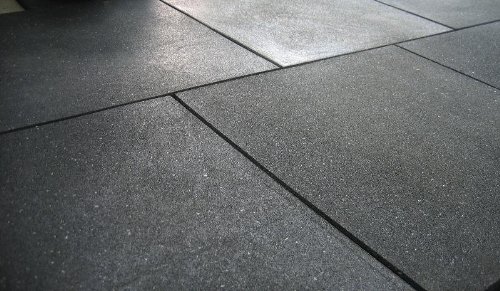
DWC Rubber Mat Flooring 4 x 6 ft x 3/4 in
Check Price on AmazonPrice and availability change often — check Amazon for current details.
Best suited for: garage and basement gyms with barbells, racks and heavy dumbbells.
These are the classic stall-style rubber mats that many garage lifters use. Made from recycled rubber tires, each 4 × 6 ft mat is 3/4 inch thick and dense enough to protect concrete from dropped dumbbells and support heavy racks. You can trim them with a utility knife to fit around posts and walls.
- Material: recycled tire rubber
- Size: 4 × 6 ft, 3/4″ thick
- Surface: smooth or diamond options
- Install: lay flat, cut with box cutter
Pros
- Extremely durable
- Great value per square foot
- Stable under racks and benches
Limitations
- Very heavy to move (each mat)
- Rubber smell at first
- Edges don’t interlock
Best Premium Tiles
2. American Floor Mats Extreme Rubber Gym Tiles (1″)
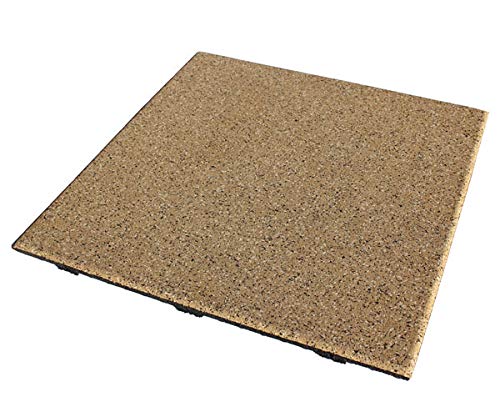
American Floor Mats Extreme Rubber Gym Tiles 1 inch
Check Price on AmazonPrice and availability change often — check Amazon for current details.
Best suited for: lifters who want a finished, commercial-style floor with strong shock absorption.
At 1 inch thick, these rubber tiles are designed for demanding use and superior shock and sound absorption. They come in colorful flecked options and beveled ADA ramps are available to finish edges, reducing trip hazards.
- Material: rubber tiles
- Thickness: 1″
- Extras: optional beveled edge ramps
- Use: lifting, functional training
Pros
- Thick and protective
- Clean, finished appearance
- Edge ramps available
Limitations
- Higher cost per square foot
- Heavy tiles take effort to install
Best Low-Profile Rubber
3. IncStores Strong Rubber Interlocking Tiles (8 mm)

IncStores 8mm Strong Rubber Interlocking Floor Tiles
Check Price on AmazonPrice and availability change often — check Amazon for current details.
Best suited for: basements and garages where you want rubber durability without raising the floor much.
IncStores’ 23 × 23 inch interlocking recycled rubber tiles are 8 mm thick, waterproof and flexible. They are built for everything from treadmills to deadlifts and have a smooth surface that is easy to clean.
- Material: recycled rubber
- Thickness: 8 mm
- Tile size: 23 × 23 in, interlocking
- Water: waterproof
Pros
- Interlocking for a seamless look
- Low profile; doors still clear
- Easy to clean
Limitations
- Thinner than stall mats for heavy drops
- Pricier than foam
Best for Apartments
4. AIRHOP Rubber-Top Exercise Equipment Mats (0.79″)

AIRHOP Rubber Top Exercise Equipment Mats 0.79 inch
Check Price on AmazonPrice and availability change often — check Amazon for current details.
Best suited for: apartment and upstairs gyms where cushioning and noise reduction matter most.
AIRHOP combines a recycled rubber top layer with a high-density EVA foam base. The rubber resists scratches from equipment, while the foam absorbs impact and noise. Twelve 24 × 24 inch tiles cover 48 sq ft (8 × 6 ft).
- Construction: rubber top + EVA foam base
- Thickness: 0.79″
- Coverage: 12 tiles, 48 sq ft
- Tile size: 24 × 24 in
Pros
- Good noise and impact reduction
- Lighter and easier to install than solid rubber
- Rubber surface resists scuffs
Limitations
- Not ideal for very heavy barbell drops
- Foam can compress under heavy machines over time
Best Cushioned Multi-Use
5. IncStores Impact Foam Rubber Tiles (3/4″)

IncStores Impact Foam Rubber Floor Tiles 3/4 inch
Check Price on AmazonPrice and availability change often — check Amazon for current details.
Best suited for: mixed-use rooms for weights, cardio and floor workouts.
These tiles bond a recycled rubber top to closed-cell EVA foam for a firm yet forgiving feel. At 3/4 inch, they offer more cushioning than solid rubber of the same thickness, making them comfortable for floor exercises and jumping.
- Construction: rubber over closed-cell EVA
- Thickness: 3/4″
- Use: weights, cardio, floor work
Pros
- Comfortable underfoot
- Durable rubber surface
- Good shock absorption
Limitations
- Less stable than solid rubber under racks
- Higher price than plain foam
Best Budget Foam
6. ProsourceFit Exercise Puzzle Mat (1/2″, 144 sq ft)

ProsourceFit Exercise Puzzle Mat 1/2 inch
Check Price on AmazonPrice and availability change often — check Amazon for current details.
Best suited for: budget setups, bodyweight training and light dumbbell work.
ProsourceFit’s high-density EVA puzzle mats are water-resistant, phthalate-free and easy to assemble. This pack covers 144 sq ft, enough for a full room, and they help protect floors and reduce noise during lighter workouts.
- Material: high-density EVA foam
- Thickness: 1/2″
- Coverage: 36 tiles, 144 sq ft
Pros
- Very affordable
- Large coverage
- Light and easy to install
Limitations
- Dents under heavy equipment
- Not for dropped weights
Best for Floor Workouts
7. BalanceFrom Puzzle Exercise Mat (1″)

BalanceFrom Puzzle Exercise Mat 1 inch
Check Price on AmazonPrice and availability change often — check Amazon for current details.
Best suited for: yoga, stretching, kids’ play areas and bodyweight training.
The 1-inch version of BalanceFrom’s popular EVA puzzle mat gives noticeably more cushioning for knees and backs during floor work. It interlocks easily and is simple to pack away.
- Material: high-density EVA
- Thickness: 1″
- Use: floor exercise, stretching
Pros
- Soft and comfortable
- Easy to assemble
- Affordable
Limitations
- Too soft for heavy equipment
- Can feel unstable for heavy standing lifts
Best Under Treadmills
8. SuperMats Heavy Duty Equipment Mat 12GS (36 × 90″)

SuperMats Heavy Duty Equipment Mat 36 x 90
Check Price on AmazonPrice and availability change often — check Amazon for current details.
Best suited for: treadmills, ellipticals, rowers and bikes on hardwood, tile or carpet.
SuperMats’ vinyl composite equipment mats are sized for large cardio machines. The textured non-slip surface keeps equipment in place and protects floors from scratches and sweat.
- Material: vinyl composite
- Size: 36 × 90 in
- Use: large treadmills, ellipticals, rowers
Pros
- Sized for big machines
- Protects floors from scratches and sweat
- Lies flat
Limitations
- Single-machine coverage only
- Thin; not for free weights
Best Rolled Rubber
9. Rubber-Cal Elephant Bark Rubber Flooring Roll
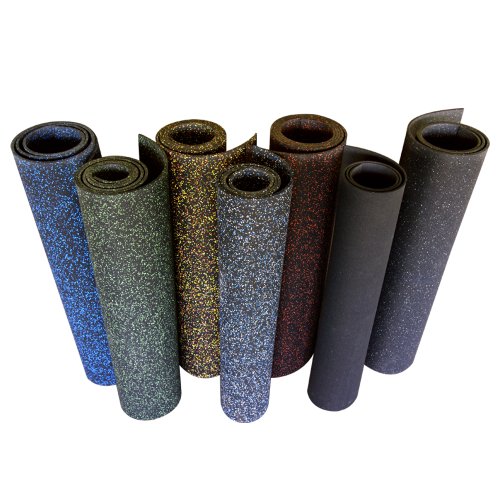
Rubber-Cal Elephant Bark Rubber Flooring 3/16 in x 4 x 20 ft
Check Price on AmazonPrice and availability change often — check Amazon for current details.
Best suited for: long, seamless runs of flooring with easy DIY installation.
Rolled rubber gives a seamless look with fewer joints. Rubber-Cal’s Elephant Bark roll is UV and water resistant and can be installed without adhesive, providing impact protection and vibration reduction for home gyms.
- Thickness: 3/16″
- Size: 4 × 20 ft roll
- Install: no adhesive needed
Pros
- Seamless appearance
- Weather and water resistant
- Simple DIY install
Limitations
- Thin; add stall mats in a lifting area
- Heavy rolls to handle
How to Choose Home Gym Flooring
1. Match the material to your training
- Solid rubber (stall mats, rubber tiles): best for free weights, racks and garages.
- Rubber-top foam: a hybrid for apartments and mixed use.
- EVA foam: bodyweight, yoga, light dumbbells, kids.
- Vinyl equipment mats: under individual cardio machines.
Not sure between the two most popular options? See horse stall mats vs gym tiles.
2. Choose the right thickness
Thicker isn’t always better — it depends on what you drop and what you stand on. Our guide to how thick home gym flooring should be gives specific recommendations by activity.
3. Consider your subfloor
Concrete handles almost anything. Wood floors, carpet and upper floors need more thought — here’s how to set up gym flooring on carpet.
4. Noise and neighbors
In apartments, combine dense rubber with a cushioning layer and avoid dropping weights. Read our guide to home gym flooring for apartment noise.
5. Odor, cleaning and weight
Recycled rubber often smells at first; airing mats out helps. Rubber is heavy, so plan delivery and installation. Foam and vinyl are easy to wipe clean.
Common Flooring Mistakes
- Using thin foam under heavy racks — it dents permanently.
- Dropping weights on thin rubber over hardwood.
- Ignoring door clearance when adding thick mats.
- Leaving gaps between mats that become trip hazards.
Flooring Types at a Glance
| Type | Durability | Comfort | Noise reduction | Ease of install | Best for |
|---|---|---|---|---|---|
| Rubber stall mats | Excellent | Firm | Good | Hard (heavy) | Garages, heavy lifting |
| Rubber tiles | Excellent | Firm | Good | Moderate | Finished rooms, lifting |
| Rubber-top foam tiles | Good | Comfortable | Very good | Easy | Apartments, mixed use |
| EVA foam puzzle mats | Fair | Soft | Fair | Very easy | Bodyweight, yoga, kids |
| Rolled rubber | Very good | Firm | Fair–good | Moderate | Seamless large areas |
| Vinyl equipment mats | Good | Firm | Fair | Very easy | Under cardio machines |
How Much Flooring Do You Need?
Measure the training area — not the whole room — and add space around each piece of equipment. As a rough guide, allow about 6 × 6 feet for dumbbell and bodyweight work, 8 × 8 feet around a bench, and the footprint of a rack plus several feet of clearance in front for loading and walking out. Add 5–10% extra to cover cuts and corners.
Installation Tips
- Start from the most visible straight edge and work outward.
- Let rubber acclimate in the room for a day or two before trimming.
- Cut with a sharp utility knife and straightedge, scoring several times.
- Keep seams tight; double-sided carpet tape can stop stall mats creeping.
- Add beveled ramps at exposed edges to reduce tripping.
Caring for Your Floor
Sweep or vacuum regularly and mop with diluted mild soap. Avoid oil-based cleaners, bleach and harsh solvents, which can break down rubber. Wipe up sweat and chalk promptly, and lift mats occasionally in basements to let the slab breathe.
Who Should Buy Which Flooring?
- Garage lifters on a budget: DWC 3/4″ rubber mats.
- Finished basements and spare rooms: American Floor Mats or IncStores rubber tiles.
- Apartments: AIRHOP rubber-top tiles plus equipment mats.
- Yoga, stretching and kids’ areas: ProsourceFit or BalanceFrom foam.
- Treadmill owners: SuperMats equipment mat.
How We Chose This Flooring
We compared the most widely available home gym flooring on Amazon by material, thickness, coverage per pack, installation method and intended use, cross-checking manufacturer listings and recurring owner feedback about odor, shifting and durability. We grouped products by the job they do best rather than declaring one universal winner, because the right floor depends on your space and training.
Alternatives and Add-Ons
- Lifting platform: for heavy deadlifts and Olympic lifts, build a plywood-and-rubber platform on top of your flooring.
- Crash pads: foam drop pads reduce noise when you must drop a barbell.
- Anti-vibration pads: small rubber pads under treadmill and rack feet cut vibration further.
- Edge ramps: finish thick tiles neatly and prevent trips.
Budget Planner by Room Size
| Area | Approx. sq ft | Typical solution |
|---|---|---|
| Dumbbell corner | 36 (6×6) | 9 rubber tiles or 2 stall mats |
| Bench area | 64 (8×8) | 16 tiles or 3 stall mats (cut to fit) |
| Rack zone | 96–120 | 4–5 stall mats or 24–30 tiles |
| One-car garage | ~200 | Stall mats in the lifting zone; tiles or bare elsewhere |
Calculating by zone, not by room, keeps costs sensible while protecting the areas that matter.
Signs It’s Time to Upgrade Your Floor
- Permanent dents under racks or benches
- Tiles that shift or separate during workouts
- Noise complaints despite careful training
- Cracked concrete or tile under your lifting area
- Foam that has compressed or torn
If you see any of these, move up a level: foam to rubber-top tiles, rubber-top to solid rubber, or add a lifting platform. For the trade-offs between the two most popular rubber options, read horse stall mats vs gym tiles, and for carpeted rooms see how to set up gym flooring on carpet.
Frequently Asked Questions
What is the best flooring for a home gym?
For free weights and garages, 3/4-inch rubber mats or 1-inch rubber tiles are best. For apartments, rubber-top foam tiles balance protection and noise reduction. For bodyweight work, EVA foam is enough.
Are horse stall mats good for home gyms?
Yes. 3/4-inch rubber stall mats are a popular, durable and cost-effective choice for garage and basement gyms, though they are heavy and may smell at first.
Can I put gym flooring over carpet?
Yes, but use firm rubber tiles or a plywood base under heavy equipment so it stays stable.
How thick should gym flooring be for dropping weights?
For dropping heavy dumbbells or barbells, at least 3/4 inch of dense rubber is a common recommendation, with lifting platforms for heavy Olympic lifts.
How much does it cost to floor a home gym?
It depends on area and material. Foam is cheapest, rubber stall mats are often the best value for durable flooring, and premium rubber tiles cost more per square foot.
Final Recommendation
For most garage gyms, start with DWC 3/4″ rubber mats. Choose American Floor Mats 1″ tiles for a premium finished floor, AIRHOP rubber-top tiles for apartments, and ProsourceFit foam for budget bodyweight spaces.
How we research: ThriveWay Fitness compares manufacturer specifications, materials, thickness, coverage, warranty terms and patterns in verified owner feedback. We do not accept payment for placement. Prices and availability change often — always confirm current details on Amazon.