Imagine being able to lift heavy objects without worrying about back pain. It’s not just a dream; it’s entirely possible with the right techniques.
If you’ve ever felt that sharp twinge in your back after lifting something, you’re not alone. Back injuries are common, but they can be prevented. You deserve to feel strong and confident every time you lift. This article will guide you through simple yet effective strategies to protect your back.
By the time you finish reading, you’ll know how to lift safely and avoid those dreaded injuries. Ready to discover how you can keep your back healthy? Let’s dive in and unlock the secrets to safe lifting.

Credit: m.facebook.com
Proper Lifting Techniques
Preventing back injuries while lifting is crucial for maintaining long-term health and mobility. Understanding and employing proper lifting techniques can significantly reduce the risk of strain and injury. Let’s delve into some essential strategies to ensure you’re lifting safely and effectively.
Bend At The Knees
Instead of bending at the waist, lower yourself by bending your knees. This allows you to use the powerful muscles in your legs to lift rather than putting undue stress on your back. Imagine the difference it makes when your legs do the heavy lifting.
Next time you pick up a heavy box, notice how much easier it feels when you squat down. Your knees act as shock absorbers, protecting your back. Give it a try and feel the difference!
Keep The Load Close
Holding the load close to your body minimizes the strain on your back. When you extend your arms, the weight feels much heavier, placing unnecessary pressure on your spine. How often have you felt your back twinge when reaching out to lift something?
By keeping the load close, you maintain better balance and control. This simple adjustment can prevent a lot of pain down the line. Always remember, the closer, the safer!
Avoid Twisting Movements
Twisting while lifting is a common cause of back injuries. It can easily lead to muscle strains or even a slipped disc. Have you ever noticed how twisting suddenly can tweak your back?
Instead, pivot your feet to turn your whole body, keeping your shoulders and hips aligned with the direction you’re moving. This small change can make a big difference in preventing injuries. Make it a habit, and protect your back every day!

Credit: m.facebook.com
Choosing The Right Equipment
Preventing back injuries while lifting doesn’t just rely on technique. Choosing the right equipment plays a crucial role in safeguarding your spine. It’s not just about what you lift, but how you gear up to lift it. Have you ever considered how a lifting belt or the right footwear can make a difference? Let’s dive into the essential equipment choices that can help you lift safely and efficiently.
Use Of Lifting Belts
Lifting belts are more than just a supportive accessory; they are a game-changer for your back health. They help stabilize your core and reduce the strain on your lower back during heavy lifts. Are you using one already? If not, consider adding a belt to your lifting routine.
When you strap on a lifting belt, it should be snug but not overly tight. The goal is to provide support without restricting your movement. Next time you’re in the gym, pay attention to how your body feels when you’re lifting with a belt versus without one. The difference might surprise you.
Selecting Appropriate Footwear
Footwear is often overlooked, but the right shoes can prevent slips and provide proper support for your back. Think about the shoes you’re wearing right now—do they offer stability and comfort?
A good pair of lifting shoes should have a solid, non-compressible sole to keep your feet grounded. Whether you’re lifting at home or at the gym, avoid running shoes as they can cause instability during lifts. Invest in shoes that cater specifically to weightlifting.
Utilizing Lifting Aids
Lifting aids like straps and gloves can enhance your grip and reduce the risk of injury. Have you ever lost your grip mid-lift? It’s a common mishap that can lead to back strain or worse.
Using straps can help you maintain control over heavy weights, allowing you to focus on form rather than grip. Gloves can protect your hands and improve your hold. Consider integrating these aids into your lifting routine to boost safety and performance.
Building Core Strength
Building core strength is essential to prevent back injuries while lifting. Engaging core muscles during lifts provides stability and reduces strain on the spine. Focus on exercises like planks and bridges to enhance core support and maintain proper posture.
Building core strength is vital to prevent back injuries while lifting. A strong core supports your spine and helps maintain balance. It also reduces strain on your back muscles. This section will explore how to strengthen your core effectively.Core Strengthening Exercises
Incorporate simple exercises into your routine. Planks are excellent for core stability. Lie face down, lift your body, and hold straight. Side planks target your oblique muscles. Hold your body on one side using one arm. Crunches focus on the abdominal muscles. Lie on your back, knees bent, lift your shoulders slightly.Incorporating Flexibility Training
Flexibility training complements core exercises. Stretching improves muscle elasticity. Yoga is a great option. It combines stretching with breathing. Try poses like the cat-cow stretch. It loosens your spine and core. Regular stretching keeps muscles flexible and strong.Importance Of Regular Workouts
Consistent workouts build and maintain strength. Aim for at least three sessions weekly. Focus on both core and flexibility. Consistency prevents injury and boosts endurance. Regular exercise promotes overall health. It ensures your body handles lifting demands efficiently.Workplace Ergonomics
Workplace ergonomics is a pivotal aspect in preventing back injuries, especially when lifting. Your workstation setup, the layout of your lifting zones, and the training programs implemented can make all the difference. Prioritizing ergonomics not only enhances safety but also boosts productivity. Have you ever felt the strain of lifting incorrectly at work? By adjusting your environment and approach, you can significantly reduce these risks and maintain a healthier workspace.
Adjusting Workstation Setup
The first step to optimizing workplace ergonomics is adjusting your workstation setup. Ensure that everything you need is within easy reach and at a comfortable height. Desks and chairs should be adjustableto accommodate your unique body dimensions. Consider using a standing desk or ergonomic chair to support your posture.
Think about how you position your equipment. Is your computer screen at eye level? Are your feet flat on the ground? Minor adjustments can prevent unnecessary strain on your back. By setting up your workstation thoughtfully, you can minimize awkward movements and potential injuries.
Creating Safe Lifting Zones
Creating safe lifting zones is crucial in reducing back injury risks. Designate specific areas for storing heavy items, ensuring they’re easily accessible. Organize tools and materials logically, so you don’t have to twist or reach awkwardly when lifting.
Consider the layout of your workspace. Are pathways clear and free of hazards? Implement shelving at appropriate heights to facilitate safer lifting practices. By creating a streamlined space, you can lift more safely and efficiently.
Implementing Proper Training Programs
Proper training programs can transform how lifting tasks are handled. Encourage regular training sessions that focus on safe lifting techniques. Use visual aids and demonstrationsto reinforce correct postures and movements.
Training should include practical exercises that allow employees to practice lifting safely. Are you aware of how to position your body to prevent injury? Empower your team with knowledge and skills that promote safety and health at work.
By focusing on workplace ergonomics, you can create a safer and more efficient environment. Have you considered how these changes could impact your daily work routine? With thoughtful adjustments and training, back injuries can become a rarity rather than a concern.
Recognizing Warning Signs
Recognizing warning signs helps prevent back injuries while lifting. Pay attention to pain, stiffness, or discomfort. Stop immediately if you feel any strain or unusual sensations. Understanding your body’s signals is crucial to avoid long-term damage.
Recognizing Warning Signs Lifting can strain the back if done carelessly. Recognizing warning signs helps prevent serious injuries. Pay attention to your body’s signals. They often indicate when something is amiss.Identifying Pain And Discomfort
Pain is a clear signal. It might be sharp or dull. Discomfort can also be a warning sign. Stiffness or soreness should not be ignored. These sensations often suggest improper lifting techniques. Listen to your body when it feels off.Responding To Injury Indicators
Timely response is crucial. Stop lifting if you feel unusual pain. Rest your back and avoid further strain. Applying ice can reduce swelling. Monitor the pain’s intensity and duration. If it persists, it may need further attention.Seeking Professional Help
Consult a professional for persistent issues. A doctor can provide a proper diagnosis. Physical therapists offer exercises to strengthen the back. They guide you on safe lifting practices. Professional advice ensures a healthy recovery.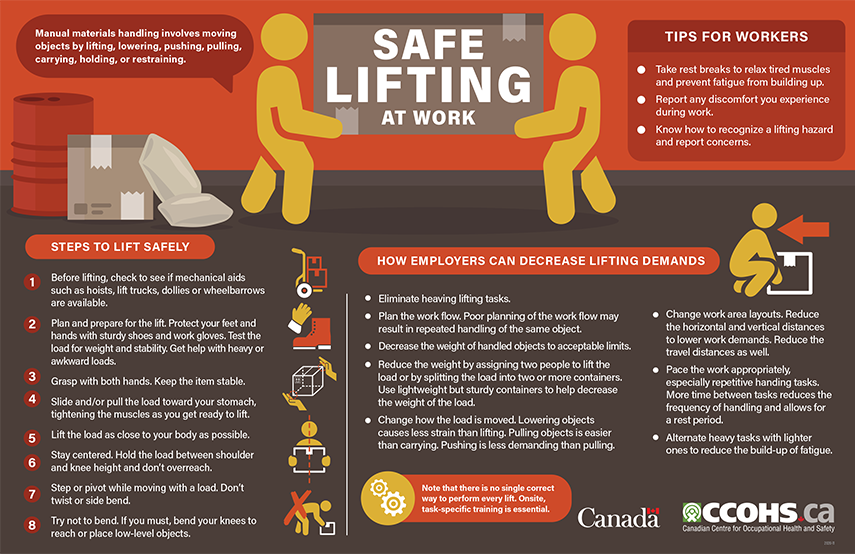
Credit: www.ccohs.ca
Practicing Mindfulness
Practicing mindfulness helps in lifting safely and preventing back injuries. Focus on your posture and breathing while lifting. Engage your core muscles to support your spine and reduce strain.
Practicing mindfulness while lifting can be your secret weapon in preventing back injuries. Mindfulness involves being fully present in the moment and paying attention to your movements and how your body feels. This approach helps you maintain proper form, reduce stress, and ultimately protect your back. Imagine lifting with a clear mind and focused energy—it’s about tuning into your body’s signals and responding intelligently.Staying Focused While Lifting
Keeping your mind on the task is crucial. Distractions can lead to poor form, increasing the risk of injury. You might be surprised how often a wandering mind affects your lift. Concentrate on the weight, your posture, and the muscles you engage. Visualize each step of the lifting process. How often do you find yourself thinking about unrelated things while lifting? Try to catch those moments and redirect your focus. This practice not only improves safety but also enhances your lifting performance.Using Breathing Techniques
Breathing plays a vital role in mindfulness and lifting. A controlled breath can stabilize your core and support your spine. Deep breaths oxygenate your muscles, giving them the energy they need. Consider trying the technique of inhaling deeply before lifting and exhaling slowly as you complete the lift. Feel the difference in your stability and strength. Have you noticed how your breath changes under stress or pressure? Experiment with different breathing patterns to find what best supports your lifts.Reducing Stress And Tension
Stress and tension can creep into your body, affecting your lifting form and increasing injury risk. It’s essential to release this tension before you start lifting. Try a quick body scan, noticing areas of tightness or discomfort. Gentle stretches can help alleviate these areas before you lift. If your mind is cluttered, it can translate into physical tension. What are your stress triggers? Identifying and addressing them can make a significant difference in your lifting experience. Embrace mindfulness as a powerful tool. It can transform your lifting practice, making it safer and more effective. What steps will you take to incorporate mindfulness into your routine?Frequently Asked Questions
What Is The Best Way To Lift Heavy Objects?
The best way is to use your legs, not your back. Keep the object close to your body. Bend at your knees and not at your waist. Maintain a straight back while lifting. This reduces strain and helps prevent injuries.
How Can I Improve My Lifting Posture?
To improve posture, stand with feet shoulder-width apart. Keep your back straight and shoulders aligned. Engage your core muscles while lifting. Avoid twisting your body. Practice regularly to build muscle memory and prevent injuries.
Why Is Warming Up Important Before Lifting?
Warming up increases blood flow and prepares muscles for lifting. It reduces the risk of injuries by enhancing flexibility. Simple exercises like stretching and light aerobic activities are effective. Spend at least 5-10 minutes warming up before lifting.
Can Wearing A Back Brace Prevent Injuries?
A back brace provides support and reduces strain on your spine. It helps maintain proper posture while lifting. However, it should not replace proper lifting techniques. Use it as an additional safety measure, especially during heavy lifting.
Conclusion
Protect your back with smart lifting habits. Start with warm-ups before lifting. Choose techniques that support your spine. Keep loads close to your body. Bend your knees, not your waist. Listen to your body’s signals. Take breaks to reduce strain.
Use tools or ask for help when needed. Avoid twisting while holding heavy items. Practicing these tips can keep injuries at bay. Stay mindful and safe while lifting. Your back will thank you for the effort. Good habits make lifting easier and safer.
Make smart choices to protect your health.