
Have you ever wondered why some sports seem to have a gender divide? Or why men and women often compete separately in many athletic events?
Understanding how gender affects sports performance can be eye-opening. It’s not just about physical differences but also involves psychological and social aspects. Imagine unlocking the secrets behind these differences and using this knowledge to enhance your own sports experience. Whether you’re an athlete, a coach, or simply a sports enthusiast, this topic holds insights that could change how you view the world of sports.
Dive into the fascinating ways gender influences athletic performance and discover how this impacts you and your favorite sports. Keep reading to uncover surprising facts and expert insights that may challenge what you thought you knew about gender and sports.
Credit: www.mdpi.com
Biological Differences
Gender influences sports performance through biological differences. Muscle mass and hormonal levels vary, impacting strength and endurance. These factors contribute to differences in speed, agility, and physical capacity between genders in sports.
Understanding biological differences helps explain gender’s impact on sports performance. Males and females have distinct physical attributes. These differences can influence how athletes compete and perform.Muscle Mass And Strength
Males generally possess more muscle mass than females. This leads to greater strength and power. Testosterone plays a significant role in muscle development. It aids in increasing muscle size and density. Females have less testosterone, resulting in smaller muscle mass. This difference affects performance in strength-based sports.Endurance And Stamina
Females often excel in endurance sports. They tend to have more body fat, which can be used as energy. Their muscles are more resistant to fatigue. This allows them to sustain activities over longer periods. Males may have higher anaerobic capacity, benefiting sprinting and short bursts. Both genders have unique advantages in endurance events.Hormonal Influences
Hormones impact physical abilities and endurance. Testosterone boosts muscle growth and recovery. Estrogen contributes to joint flexibility and endurance. Hormonal cycles can affect female athletes’ performance. Training and diet are tailored to manage these effects. Understanding hormonal influences helps athletes optimize their abilities.Psychological Factors
Psychological factors play a crucial role in sports performance, often influencing how athletes approach training and competition. While physical abilities are important, mental aspects can determine success just as much. Gender can impact these psychological factors differently, shaping the way athletes perceive themselves and their capabilities.
Confidence And Self-perception
Confidence can make or break an athlete’s performance. Studies show that male athletes often exhibit higher levels of self-confidence compared to female athletes. This difference can stem from societal expectations and stereotypes. Imagine you’re preparing for a big game; your belief in your abilities can influence your focus and determination.
Yet, self-perception can be transformed. Female athletes can boost their confidence through positive reinforcement and setting achievable goals. It’s about recognizing your strengths and understanding your potential. How do you perceive your abilities when under pressure?
Mental Toughness
Mental toughness refers to resilience and the ability to handle stress. Some research suggests that male athletes might display higher mental toughness due to cultural conditioning. But this doesn’t mean female athletes lack it. In fact, many excel in sports requiring immense mental strength, like gymnastics or figure skating.
Developing mental toughness involves facing challenges head-on and learning from failures. Regardless of gender, athletes can build this trait by pushing their limits and maintaining a positive mindset. When faced with adversity, how do you react?
Motivation And Drive
Motivation is the fuel for athletes. Gender can influence what drives individuals in sports. Male athletes might be motivated by competitiveness, while female athletes often find motivation in teamwork and personal growth. Understanding what drives you can enhance your training and performance.
Consider setting clear objectives and celebrating small victories. These can keep your motivation high regardless of gender. Reflect on what ignites your passion for sports. What keeps you going when the going gets tough?
Social And Cultural Influences
Social and cultural influences shape gender roles in sports. These influences impact how athletes perform and are perceived. Society’s views can either support or limit athletes’ opportunities. Understanding these influences is crucial for fair and inclusive sports environments.
Gender Stereotypes
Gender stereotypes affect how athletes are viewed. Society often labels sports as male or female. This bias can limit participation and opportunities. Female athletes may face doubt about their abilities. Male athletes might feel pressure to conform to strong and aggressive roles. These stereotypes can hinder personal growth and performance.
Access To Resources
Access to resources varies by gender. Men often receive more support and funding. This disparity affects training facilities, coaching, and equipment. Women might struggle to find equal opportunities. Limited resources can hamper skill development and performance. Equal access ensures all athletes can reach their full potential.
Role Models And Representation
Role models inspire future generations. Seeing successful athletes of the same gender can boost confidence. Representation in media and sports organizations matters. It encourages participation and breaks down barriers. A lack of role models might deter young athletes. Diverse representation promotes inclusivity and broadens horizons.
Credit: apnews.com
Training And Development
Exploring how gender influences sports performance reveals key differences in strength, endurance, and agility. Biological and hormonal factors play significant roles in how athletes perform. Understanding these differences can help tailor training programs for better results.
Training and development in sports are crucial for enhancing performance. Gender plays a significant role in shaping these processes. Athletes often require tailored approaches to maximize their potential. Understanding gender differences can lead to more effective training programs.Coaching Approaches
Coaches adapt strategies based on gender-specific needs. Men and women might respond differently to certain techniques. Communication style is key in building trust and motivation. Coaches may focus on strengths associated with each gender. This helps in creating an environment where athletes feel supported.Skill Acquisition
Skill learning varies between genders due to physiological differences. Men may excel in activities requiring more muscle power. Women might perform better in tasks needing flexibility and coordination. Gender-specific training can accelerate skill acquisition. Tailoring exercises to strengths improves technique and efficiency.Injury Prevention And Recovery
Injury risks differ between male and female athletes. Women may be prone to certain injuries like ACL tears. Men might face more muscle strains due to intense power sports. Recovery strategies should consider these differences. Proper training helps minimize injury risks and speeds up recovery.Impact On Performance Metrics
Gender plays a role in sports performance through physiological differences. Men generally have greater muscle mass, impacting strength and speed metrics. Women may excel in endurance sports due to higher fat percentage and efficient metabolism.
Understanding how gender affects sports performance is crucial for appreciating the diversity and complexity in athletic achievements. Performance metrics, the measurable aspects of athletic ability, reveal fascinating insights into how gender influences sports outcomes. These metrics not only highlight physical differences but also showcase the unique strengths each gender brings to the field.Performance Statistics
Performance statistics clearly show that men and women excel in different areas. Men often have advantages in sports requiring greater muscle mass and cardiovascular endurance, like weightlifting and long-distance running. Women, on the other hand, tend to outperform men in sports emphasizing flexibility, balance, and precision, such as gymnastics and figure skating. Such statistics can challenge our understanding of potential. Ever noticed how the strategies differ in women’s soccer compared to men’s? It’s not just about speed; it’s about leveraging agility and tactical skills.Records And Achievements
Records and achievements in sports provide a concrete reflection of gender differences in performance. Consider the world records in track events: the times for men and women differ, yet both are celebrated for their excellence. This distinction is not about superiority but about acknowledging distinct capabilities. The achievements of athletes like Serena Williams and Usain Bolt highlight how records inspire and set benchmarks. What drives these athletes isn’t just physical prowess but determination and mental resilience.Comparative Analysis
A comparative analysis of gender-based performance can offer deeper insights. For instance, mixed-gender events like the marathon provide a unique perspective on endurance and strategy. It’s intriguing to see how pacing strategies differ between genders, yet both achieve remarkable feats. In team sports, mixed-gender teams often capitalize on diverse skills, proving that combining strengths can lead to success. Have you ever considered how these dynamics can reshape training and teamwork? By examining these metrics, you gain a more nuanced understanding of sports performance. Each gender brings its own strengths, and recognizing this can enrich your appreciation of the sports world. What do you think about these insights? How do they influence your perspective on gender and athletics?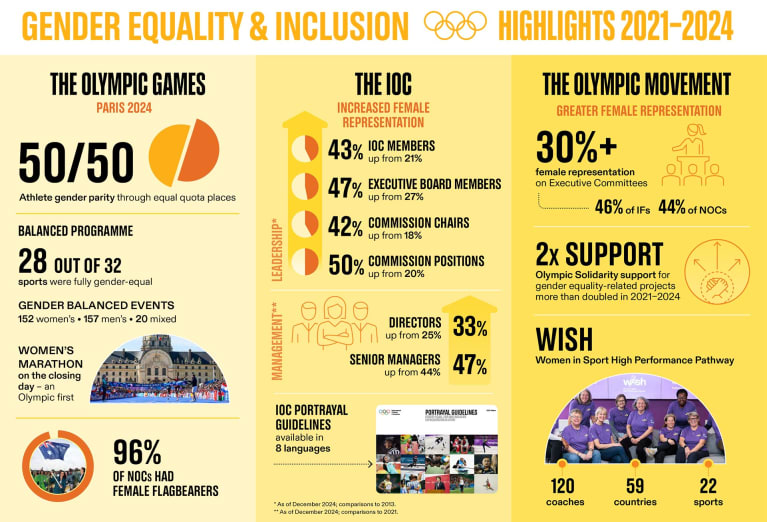
Credit: www.olympics.com
Future Trends In Gender And Sports
Gender plays a crucial role in sports performance. Biological differences impact strength, speed, and endurance levels. Social factors also influence opportunities and participation rates.
The world of sports is witnessing significant changes. Gender roles are evolving, impacting sports performance and participation. Future trends in gender and sports are influenced by technology, policies, and societal norms. These factors shape how athletes train, compete, and are recognized.Technological Advancements
Technology is transforming sports training and performance. Wearable devices track real-time data for athletes. This helps in tailoring training programs based on individual needs. Gender-specific research is improving equipment design. Customized gear enhances comfort and performance for all genders. Virtual reality offers immersive training experiences. Athletes can simulate different scenarios without physical risks.Policy Changes
Sports organizations are revising gender-related policies. There is a push for more inclusive practices. Policies now focus on equal opportunities for all athletes. Gender equality initiatives are gaining momentum. They promote fair competition and representation. Organizations are also rethinking gender categories. Some sports are adopting mixed-gender events.Evolving Gender Norms
Society is challenging traditional gender roles. This shift is visible in sports culture too. More women are participating in previously male-dominated sports. Men are also entering fields traditionally dominated by women. There is growing acceptance of non-binary athletes. This change fosters a more inclusive sports environment. Public perceptions are evolving, influencing sports participation. Young athletes see diverse role models and feel inspired.Frequently Asked Questions
How Does Gender Impact Athletic Performance?
Gender influences athletic performance through biological and physiological differences. Men generally have higher muscle mass and testosterone levels, which can enhance strength and speed. Women often excel in endurance and flexibility due to higher body fat percentages. These differences don’t determine skill but can affect performance in various sports.
Are Women’s Sports Less Competitive Than Men’s?
Women’s sports are equally competitive as men’s, showcasing high levels of skill and dedication. The intensity and complexity of training are similar, with athletes striving for excellence. Differences in performance are more about physical and physiological factors rather than competitiveness, making both equally challenging and thrilling.
Why Do Men And Women Compete Separately In Sports?
Men and women compete separately to ensure fair competition due to physiological differences. Men typically have more muscle mass and higher testosterone levels, affecting speed and strength. Separate categories allow athletes to compete on a level playing field, maximizing their potential and ensuring fairness in sports.
Do Hormonal Differences Affect Sports Performance?
Yes, hormonal differences significantly impact sports performance. Testosterone boosts muscle mass and strength, benefiting male athletes. Women have higher estrogen levels, enhancing endurance and flexibility. These hormonal variations influence physical capabilities but don’t define an athlete’s skill, dedication, or competitive spirit in sports.
Conclusion
Gender influences sports performance in diverse ways. Physical differences play a key role. Men often have more muscle mass. Women excel in endurance sports. Social factors also impact. Support and opportunities vary. Mindset can affect performance too. Confidence and encouragement boost athletes.
Equal training and resources help bridge gaps. Understanding these dynamics is essential. Coaches and athletes need awareness. Strive for fair opportunities in sports. Break barriers and celebrate diversity. Sports should unite, not divide. Appreciate unique strengths of every athlete. This enriches the sporting world.
Embrace diversity for a better future.