
Last updated: November 16, 2026 · By the ThriveWay Fitness Editorial Team
Quick answer
The SPIbelt Original is the best running belt for most runners: a slim, expandable pocket that fits modern phones and stays put. If you dislike buckles, the FlipBelt Zipper is a comfortable tube design. Need more space? The Nathan Zipster Max carries the most. For longer runs with water, choose the Nathan Trail Mix Plus, and for trails the Salomon Pulse.
In this guide
- Best Running Belts Compared
- The 8 Best Running Belts in 2026
- How to Choose a Running Belt
- Running Belt Types Explained
- What Size Phone Will Fit?
- Materials, Comfort and Weather Resistance
- Running Belt Care
- Do You Really Need a Running Belt?
- How to Wear a Running Belt Correctly
- Frequently Asked Questions
- Final Recommendation
A good running belt lets you carry your phone, keys, cards and a gel or two without bouncing, chafing or holding anything in your hands. A bad one rides up, bounces with every stride and leaves your phone sweaty. Fit, pocket design and materials make all the difference.
We compared pocket dimensions, waist sizing, materials and closure styles from manufacturer listings on Amazon, plus common themes in runner feedback. We haven’t run with every belt ourselves, so we focus on what each design does best.
Best Running Belts Compared
| Running belt | Best for | Highlights | |
|---|---|---|---|
| SPIbelt Original | Best overall | Expands to 9×4×2″, waist 25–47″ | Check Price |
| FlipBelt Zipper | Best tube-style (no buckle) | Zip pocket + key hook | Check Price |
| Nathan Zipster Max | Most storage | Extra-large front & back zip pockets | Check Price |
| SPIbelt Dual Pocket Pro | Best for organizing | Two flat pockets, 1.5″ belt | Check Price |
| Nathan Trail Mix Plus 3.0 | Best hydration belt | Belt with flasks + phone pocket | Check Price |
| Amphipod AirFlow MicroStretch Plus | Best minimalist | Ultra-light micro mesh | Check Price |
| Salomon Pulse Belt | Best for trail running | Buckle-free, jacket/pole straps | Check Price |
| Gear Beast Running Belt | Best budget | Water-resistant zip, waist 24–42″ | Check Price |
The 8 Best Running Belts in 2026
Best Overall
1. SPIbelt Original Running Belt

SPIbelt Original Running Belt
Check Price on AmazonPrice and availability change often — check Amazon for current details.
Best suited for: everyday runners who want a slim belt for a phone, keys and ID.
The SPIbelt is the classic small-pocket running belt. Its expandable pocket stretches to about 9 × 4 × 2 inches — enough for current large phones, keys and gels — while the soft 1-inch elastic band fits waists from 25 to 47 inches and resists chafing.
- Pocket: expands to ~9 × 4 × 2 in
- Waist: 25–47 in
- Band: 1″ soft elastic
Pros
- Low profile, minimal bounce
- Fits large phones
- Affordable and durable
Limitations
- Single pocket
- Buckle must sit comfortably
Best Tube-Style
2. FlipBelt Zipper

FlipBelt Zipper Running Belt
Check Price on AmazonPrice and availability change often — check Amazon for current details.
Best suited for: runners who hate buckles and want items spread around the waist.
FlipBelt is a seamless tube you step into. Items slip into openings and you flip the belt so pockets face inward. The Zipper version adds a zipped pouch for valuables and an internal key hook. It’s made of soft, moisture-wicking fabric — just pick the right size, since fit depends on snugness.
- Design: seamless tube, no buckle
- Storage: 1 zip pocket + 3 openings, key hook
- Fabric: moisture-wicking
Pros
- Very comfortable
- Spreads weight evenly
- Secure zip pocket
Limitations
- Sizing must be right
- Slower to access items
Most Storage
3. Nathan Zipster Max

Nathan Zipster Max Running Belt
Check Price on AmazonPrice and availability change often — check Amazon for current details.
Best suited for: runners who carry a big phone plus gels, keys and cards.
Nathan’s Zipster Max uses extra-large zippered front and back pockets in a bounce-free waist pack design. The large front pocket fits all phones, making it a great choice for long runs.
- Pockets: large zippered front and back
- Phones: fits all major phones
- Sizing: per Nathan size chart
Pros
- Lots of storage
- Easy-access zippers
- Trusted running brand
Limitations
- Bulkier than SPIbelt
- Choose correct size
Best for Organizing
4. SPIbelt Dual Pocket Pro

SPIbelt Dual Pocket Pro Running Belt
Check Price on AmazonPrice and availability change often — check Amazon for current details.
Best suited for: runners who like to separate phone from keys and fuel.
Two flat pockets — the larger expands to about 8 × 4 × 2 inches — keep items organized. The wider 1.5-inch band fits 29–47 inch waists for added stability.
- Pockets: 2 expandable
- Main pocket: ~8 × 4 × 2 in
- Band: 1.5″, waist 29–47 in
Pros
- Better organization
- Stable wider band
- Lies flat when empty
Limitations
- Minimum waist 29 in
- Slightly more fabric
Best Hydration Belt
5. Nathan Trail Mix Plus 3.0

Nathan Trail Mix Plus 3.0 Hydration Belt
Check Price on AmazonPrice and availability change often — check Amazon for current details.
Best suited for: long runs and hot weather when you need water on your waist.
This hydration belt holds water flasks and adds an expandable front zip pocket for your phone plus an exterior mesh pocket. It’s one size fits most.
- Hydration: flasks included
- Storage: large zip pocket + mesh pocket
- Fit: one size fits most
Pros
- Carries water and essentials
- Good for longer runs
- Easy access storage
Limitations
- Heavier when full
- More bounce than phone-only belts
Best Minimalist
6. Amphipod AirFlow MicroStretch Plus

Amphipod AirFlow MicroStretch Plus Belt
Check Price on AmazonPrice and availability change often — check Amazon for current details.
Best suited for: racers and minimalists who want the lightest belt possible.
Amphipod’s micro-mesh belt is ultra-light and breathable, with a zippered pocket for gels, ID, cash, cards and keys and an internal divider. It’s slightly wider than the original MicroStretch.
- Construction: breathable micro mesh
- Storage: zippered pocket with divider
- Fit: fully adjustable slender band
Pros
- Very light and breathable
- Good for race day
- Comfortable
Limitations
- Smaller capacity
- May not fit the largest phones with cases
Best for Trail Running
7. Salomon Pulse Belt

Salomon Pulse Trail Running Belt
Check Price on AmazonPrice and availability change often — check Amazon for current details.
Best suited for: trail runners who need to carry a jacket or poles too.
Salomon’s Pulse belt is a buckle-free tube made from stretch fabrics with multiple expandable pockets. Diagonal straps with silicone grip can hold a jacket or trekking poles.
- Design: tubular, buckle-free
- Storage: multiple expandable pockets
- Extras: straps for jacket/poles
Pros
- Very stable
- Versatile carrying
- Durable stretch fabric
Limitations
- Sized (S–XL), so check fit
- Pricier than basic belts
Best Budget
8. Gear Beast Running Belt
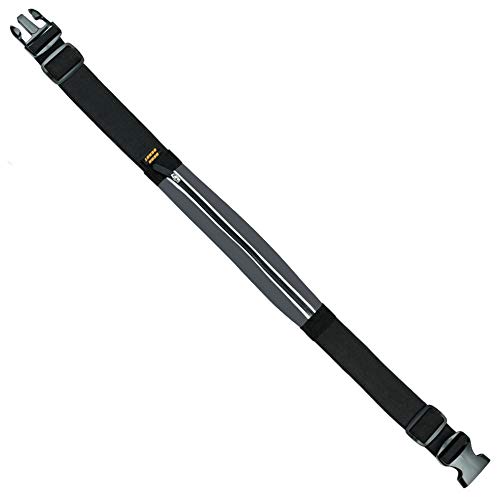
Gear Beast Running Belt Phone Holder
Check Price on AmazonPrice and availability change often — check Amazon for current details.
Best suited for: budget-conscious runners and walkers.
Gear Beast’s expandable spandex pouch has a water-resistant zipper and fits waists from 24 to 42 inches. It’s a simple, affordable way to run hands-free.
- Waist: 24–42 in
- Pouch: expandable, water-resistant zip
- Material: lightweight spandex
Pros
- Very affordable
- Water-resistant zip
- Fits most phones
Limitations
- Less refined than SPIbelt
- Smaller max waist size
How to Choose a Running Belt
- What you carry: phone + keys → slim belt; plus gels and water → hydration belt or vest. Our guide to what to carry on a long run helps you decide.
- Belt or vest? For lots of water, a vest may be better — compare in running belt vs hydration vest.
- Fit: snug enough not to shift, not so tight it restricts breathing.
- Closure: buckle belts are easy to adjust; tube belts avoid buckle pressure.
- Bounce: load heavy items centered and wear the belt low on the hips — see how to stop a running belt from bouncing.
Running Belt Types Explained
| Type | Best for | Pros | Cons |
|---|---|---|---|
| Slim stretch tube belt | Phones, keys, gels on everyday runs | Low-profile, minimal bounce, fits under shirts | Limited capacity; items can be harder to reach |
| Zippered pouch belt | Secure storage, cards and keys | Easy access, secure zips | Can bounce if overloaded |
| Hydration belt with bottles | Long runs in warm weather | Carries 300–600 ml of water | Heavier; more prone to movement |
| Race bib belt | Race day | Holds your bib without pins, often with gel loops | Little storage |
What Size Phone Will Fit?
Many modern phones are large, especially in a case. Before buying, check the belt’s stated maximum phone size and compare it with your phone’s measurements in its case. Stretch-fabric belts are usually more forgiving than zippered pockets. If you carry a very large phone, look for belts that specifically mention compatibility with larger “Plus”, “Max” or “Ultra” models.
Materials, Comfort and Weather Resistance
Soft, moisture-wicking Lycra or spandex blends are comfortable against the skin and reduce chafing. Wider waistbands spread pressure more evenly, which many runners find more comfortable on long runs. Most belts are sweat- or water-resistant rather than waterproof; in heavy rain, put your phone in a small zip-top bag inside the belt. Reflective trim is a worthwhile safety detail for early-morning or evening runs.
Running Belt Care
- Rinse or hand-wash after sweaty runs to prevent odor and salt build-up.
- Air-dry instead of using a dryer, which can damage elastic.
- Close zippers and Velcro before washing to protect the fabric.
- Replace the belt when the elastic stretches out and it no longer stays snug.
Do You Really Need a Running Belt?
If you only carry a key on short runs, a key pocket in your shorts may be enough. But once you start carrying a phone for music, navigation or safety, plus cards, gels or a small bottle, a belt keeps everything secure without the swinging of an armband or the bulk of a vest. It’s one of the cheapest upgrades that makes a big difference to comfort. For longer runs, see our guide on what to carry on a long run, and if your current belt moves around, try these fixes on how to stop a running belt from bouncing.
How to Wear a Running Belt Correctly
Most bounce problems come from how the belt is worn rather than the belt itself. Wear it low on your hips rather than around your natural waist, tighten it so it stays put without digging in, and center the heaviest item — usually your phone — at the small of your back or directly in front. Spread lighter items evenly on both sides. If you’re carrying water, choose a belt designed for bottles; standard belts aren’t built for that weight. Belt or vest for longer efforts? Compare both in our running belt vs hydration vest guide.
Frequently Asked Questions
What is the best running belt for a phone?
The SPIbelt Original is a popular choice because its expandable pocket fits large phones and stays low profile.
Do running belts bounce?
A well-fitted belt worn snugly on the hips with weight centered should bounce very little.
Should I wear a running belt in front or back?
Many runners wear it at the front or side for easy access; some prefer the back for comfort. Try both.
Are tube belts like FlipBelt better than buckle belts?
Tube belts avoid buckles and spread weight, but sizing matters. Buckle belts are easier to adjust.
Is a running belt better than an armband?
For most runners, yes. A belt keeps weight close to your center of gravity, holds more and avoids the arm swing imbalance of an armband.
Can you wear a running belt under a shirt?
Slim stretch belts are designed to sit flat under a shirt or jacket, which also helps keep them secure.
Do running belts work for walking and hiking?
Yes. They’re great for walks, hikes, travel and cycling — anywhere you want hands-free storage for a phone, cards and keys.
How tight should a running belt be?
Snug enough that it doesn’t slide or bounce when you jog in place, but loose enough to breathe deeply and not leave marks. Adjust it after a few minutes once your body warms up.
Final Recommendation
Get the SPIbelt Original for everyday runs, the FlipBelt Zipper if you prefer no buckle, the Nathan Zipster Max for maximum storage, or the Nathan Trail Mix Plus if you need water.
How we research: ThriveWay Fitness compares manufacturer specifications, pocket size, sizing and materials, warranty terms and patterns in verified owner feedback. We do not accept payment for placement. Prices and availability change often — always confirm current details on Amazon.